Why Pinterest Has No True Direct Competitors
When people think of visu When people think of visual discovery online, one name almost always comes to mind: Pinterest. Since its launch in 2010, Pinterest has grown into a unique mix of search engine, digital scrapbook, and lifestyle inspiration hub. Millions of users flock to it daily for ideas on food, fashion, home décor, travel, DIY projects, and shopping. But here’s the big question: why doesn’t Pinterest hav…
About This Article
When people think of visu
When people think of visual discovery online, one name almost always comes to mind: Pinterest. Since its launch in 2010, Pinterest has grown into a unique mix of search engine, digital scrapbook, and lifestyle inspiration hub. Millions of users flock to it daily for ideas on food, fashion, home décor, travel, DIY projects, and shopping.
But here’s the big question: why doesn’t Pinterest have a direct competitor the way Facebook has Instagram, or TikTok has YouTube Shorts?
The answer lies in how Pinterest combines several worlds in a way no other platform has been able to duplicate.
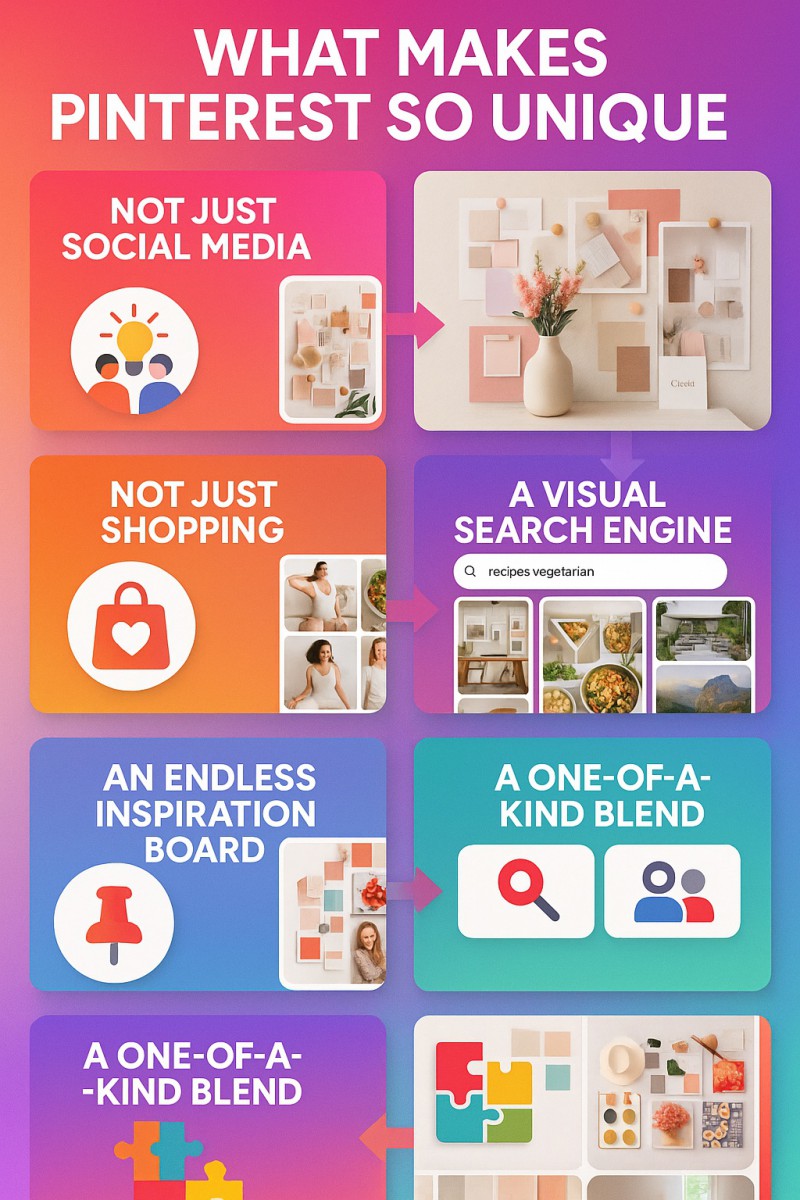
What Makes Pinterest So Unique
-
Not Just Social Media – Unlike Instagram or TikTok, Pinterest isn’t about showing off your life. It’s about collecting and curating ideas.
-
Not Just Shopping – Unlike Wanelo or ShopStyle, Pinterest isn’t built only around buying things. Shopping is one element, but inspiration is the real driver.
-
A Visual Search Engine – More than a timeline, Pinterest functions like Google for ideas — but with a personal, creative twist.
-
An Endless Inspiration Board – The digital pinboard concept allows users to save, organize, and discover content in a way that feels natural, creative, and personal.
It’s this combination that makes Pinterest so difficult to replicate.
Platforms That Come Close — But Don’t Quite Match
While no one does exactly what Pinterest does, several platforms compete in specific areas.
Creative & Design-Focused Platforms
-
Behance – Adobe’s platform for designers to showcase professional portfolios.
https://www.behance.net -
Dribbble – A community where designers share their work and get feedback.
https://dribbble.com -
Designspiration – A bookmarking tool for design-focused inspiration.
https://www.designspiration.com -
Milanote – A mood board and project organization tool for creatives.
https://milanote.com
Why they’re different: These platforms focus on professional design communities, not broad lifestyle discovery.
Discovery & Curation Platforms
-
Mix – The successor to StumbleUpon, curating articles, videos, and images.
https://mix.com -
Flipboard – Lets users create personal “magazines” by collecting content.
https://flipboard.com -
Are.na – A minimalistic platform for organizing ideas and content.
https://www.are.na -
Pearltrees – Allows saving and sharing of web content in visual collections.
https://www.pearltrees.com
Why they’re different: These platforms are about content curation and reading, not visual inspiration for lifestyle and shopping.
Shopping & Lifestyle Platforms
-
Wanelo – A social shopping site for discovering and buying products.
https://www.wanelo.com -
ShopStyle – A giant product search and shopping platform.
https://www.shopstyle.com -
Grabble – An app for saving and shopping fashion and lifestyle items.
https://www.grabble.com -
Xiaohongshu (Little Red Book) – A Chinese platform mixing lifestyle blogging and shopping.
https://www.xiaohongshu.com -
Limeroad – An Indian social shopping network with scrapbook-like collections.
https://www.limeroad.com -
We Heart It – A social platform for sharing fashion, beauty, and lifestyle images.
https://weheartit.com
Why they’re different: These platforms lean into shopping catalogs and commerce, not open-ended inspiration.
Image & Photography Platforms
-
Flickr – A long-standing photography community.
https://www.flickr.com -
Pexels – A stock photo and video platform.
https://www.pexels.com -
Unsplash – Free high-resolution photography contributed by creators.
https://unsplash.com
Why they’re different: These are photo libraries, not interactive idea boards.
Why There Are No True Pinterest Clones
-
Too Broad to Copy – Pinterest’s blend of design, shopping, DIY, lifestyle, and search is hard to bundle into one experience.
-
Different User Intent – Most platforms focus on self-expression or transactions; Pinterest focuses on inspiration and planning.
-
Strong Network Effect – Pinterest has a massive existing content base and user community that’s tough to replicate.
-
Identity Crisis for Competitors – Platforms that tried (like Fancy or Juxtapost) either pivoted to pure e-commerce or faded into niche communities.
Bottom Line
Pinterest remains in a category of its own:
-
A visual search engine like Google Images — but personal.
-
A social scrapbook like Instagram — but idea-driven, not personality-driven.
-
A shopping discovery tool like Amazon — but inspiration-first.
That unique mix explains why, more than a decade later, there are alternatives that compete in pieces of Pinterest’s world — but no true direct competitor.
{rsform 176}