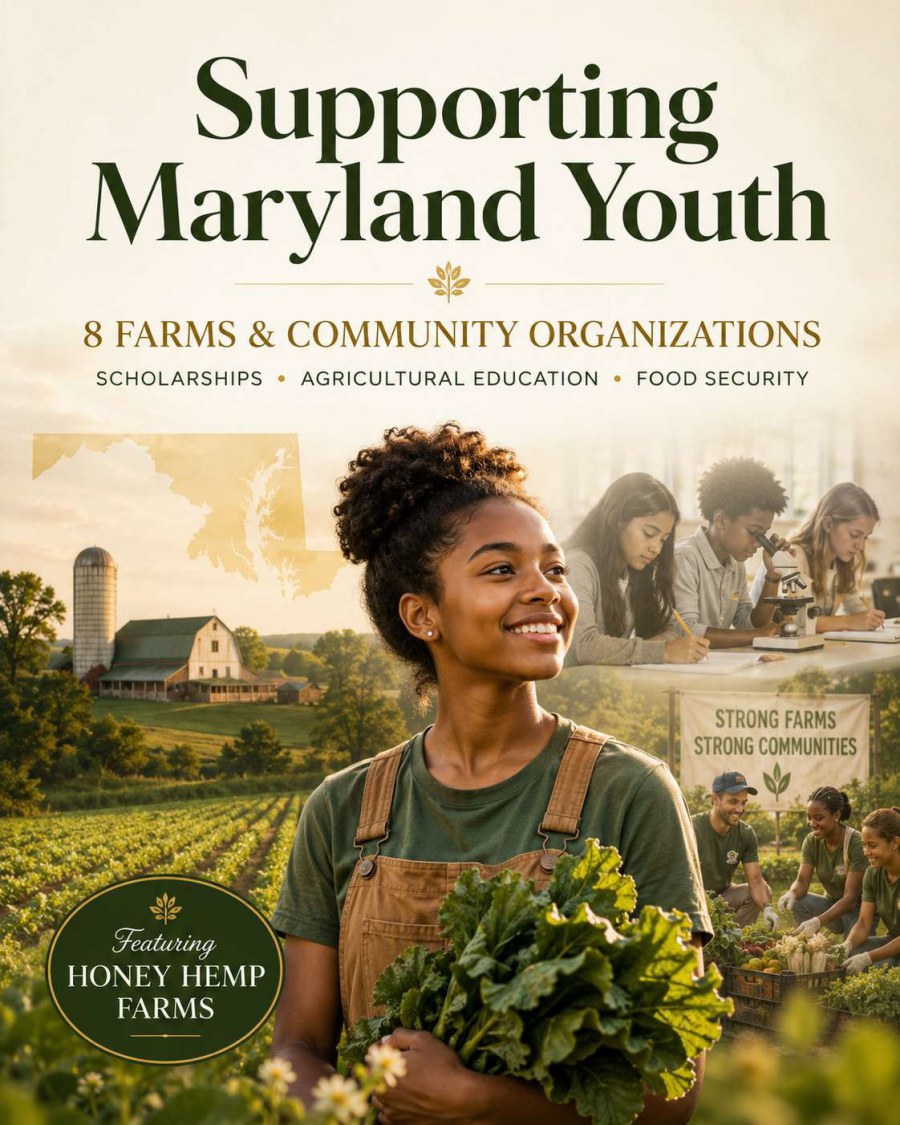
8 Farms and Community Organizations Supporting Maryland Youth
Explore Scholarships, Agricultural Education, Food Security Programs and Community Development Initiatives Maryland’s agricultural community does more than grow food. Across the state, farms, educational institutions and nonprofit organizations are helping young people develop practical skills, pursue higher education, understand where their food comes from and become more involved in their communities. These initia…
About This Article
Maryland’s agricultural community does more than grow food. Across the state, farms, educational institutions and nonprofit organizations are helping young people develop practical skills, pursue higher education, understand where their food comes from and become more involved in their communities.
These initiatives expose students to farming, environmental stewardship, nutrition, science, entrepreneurship and leadership. Some provide scholarships and structured learning opportunities, while others offer farm visits, mentoring, workshops, volunteer projects and hands-on agricultural education.
Here are eight farms and community organizations helping cultivate Maryland’s next generation.
🌿 1. Honey Hemp Farms — Agriculture, Wellness and Educational Opportunity
📍 11504 Croom Road, Upper Marlboro, Maryland 20772
Honey Hemp Farms is a family-owned Maryland agricultural and wellness business with a mission extending beyond the products grown or sold on the farm.
The business combines agriculture, natural wellness, entrepreneurship and community development. Through its community-focused initiatives, Honey Hemp Farms seeks to help young people recognize the opportunities available through education, farming, wellness and business ownership.
🎓 Honey Hemp Farms Community Futures Scholarship
One of the farm’s most important youth-focused initiatives is the Honey Hemp Farms Community Futures Scholarship.
The scholarship was established to invest in students whose education can help strengthen families, communities and sustainable futures.
Launched in collaboration with the Anacostia Coordinating Council, the initiative reflects Honey Hemp Farms’ belief that supporting education is an important part of cultivating healthy and prosperous communities.
What Honey Hemp Farms Contributes
✅ Educational support through its scholarship initiative
✅ Exposure to agricultural entrepreneurship
✅ Community outreach and engagement
✅ Representation of Black-owned and woman-owned agriculture
✅ Awareness of wellness-oriented agricultural products
✅ Encouragement for students pursuing educational goals
Products and Agricultural Interests
Honey Hemp Farms offers a growing selection of farm-inspired wellness products, including:
- 🍯 Hemp honey
- 🍵 Hemp herbal teas
- 🌱 Hemp oils
- 🧪 Tinctures
- 🍭 Gummies
- 🧴 Body lotions
- 🛁 Bath salts
By connecting agriculture with wellness and economic opportunity, Honey Hemp Farms presents young people with a broader view of what a modern farm-based business can become.
🔗 Learn about the Honey Hemp Farms Community Futures Scholarship:
https://honeyhemp-farms.com/index.php?option=com_sppagebuilder&view=page&id=65&Itemid=501
🌱 2. ECO City Farms — Urban Farming and Community Education
📍 Prince George’s County, Maryland
ECO City Farms is a nonprofit urban teaching and learning farm serving communities throughout Prince George’s County.
Its work includes growing healthy food, protecting the environment and educating beginning farmers, students and community members about sustainable urban agriculture.
Programs and Learning Opportunities
ECO City Farms offers practical agricultural education through:
- 🌱 Urban food production
- ♻️ Composting and soil health
- 🥗 Nutrition and healthy living
- 🌾 Sustainable agriculture
- 🤝 Apprenticeships and internships
- 💼 Beginning-farmer training
- 🧑🌾 Community-based agricultural education
Participants can gain hands-on experience while learning how agriculture, environmental stewardship, food access and public health are connected.
Why It Matters
ECO City Farms demonstrates that agriculture can thrive within urban and suburban communities—not only on large rural properties.
Its educational programs also introduce participants to possible careers in farming, sustainability, nutrition and food-system development.
🔗 Visit ECO City Farms:
https://www.ecoffshoots.org/
🔗 Explore its programs:
https://www.ecoffshoots.org/about-us/our-programs/
🍀 3. Maryland 4-H — Learning by Doing
📍 Programs available throughout Maryland
Maryland 4-H is one of the state’s most established youth-development networks. Administered through University of Maryland Extension, the program uses hands-on projects and supportive adult mentorship to help young people build knowledge, confidence and leadership skills.
Areas of Learning
Depending on the local club, county and available programming, participants may explore:
- 🐄 Animal science
- 🌾 Agriculture
- 🌻 Gardening and plant science
- 🌎 Environmental stewardship
- 🤖 Robotics and technology
- 🍎 Health and nutrition
- 🎤 Public speaking
- 🧑🤝🧑 Community service
- 💼 Leadership development
What Makes 4-H Valuable?
The organization’s learning-by-doing model helps participants turn lessons into practical experiences.
Young people may complete projects, attend camps, participate in fairs, give presentations or work with mentors. These experiences can strengthen communication, responsibility, problem-solving and teamwork.
🔗 Explore Maryland 4-H Youth Development:
https://extension.umd.edu/programs/4-h-youth-development
🔗 Explore Prince George’s County 4-H:
https://extension.umd.edu/locations/prince-georges/4-h-youth-development
🚜 4. Maryland Agricultural Education Foundation — Bringing Agriculture Into Education
📍 Serving schools and communities across Maryland
The Maryland Agricultural Education Foundation, commonly known as MAEF, helps students, teachers and families better understand agriculture and its importance to everyday life.
Its educational reach extends from early childhood through post-secondary learning.
Programs and Resources
MAEF supports agricultural education through initiatives such as:
- 📚 Classroom resources
- 🚛 Mobile agricultural science experiences
- 🌾 Agricultural literacy activities
- 👩🏫 Teacher training
- 🧪 Interactive science lessons
- 🏫 School and community programming
- 🎓 Scholarships and awards
By presenting agriculture through science, economics, nutrition and environmental studies, MAEF helps students understand that farming involves much more than planting and harvesting.
Preparing Future Agricultural Leaders
Its programs can introduce students to careers in:
- Agricultural science
- Agricultural education
- Food production
- Natural-resource management
- Agricultural technology
- Environmental protection
- Agribusiness
MAEF also supports educators who incorporate agriculture into core classroom subjects.
🔗 Visit the Maryland Agricultural Education Foundation:
https://maefonline.com/
🎓 5. Maryland Farm Bureau — Scholarships and Next-Generation Leadership
📍 Serving agricultural communities across Maryland
The Maryland Farm Bureau works to strengthen and expand agriculture throughout the state.
In addition to representing farmers, the organization supports educational opportunities, scholarships and leadership development.
Scholarship Support
State and county Farm Bureau programs periodically offer scholarships and grants to eligible students.
Opportunities may support students studying:
- 🌾 Agriculture
- 🧬 Agricultural science
- 🌳 Natural resources
- 🐓 Animal science
- 🚜 Agribusiness
- 📚 Other approved academic disciplines
Scholarship amounts, membership requirements, deadlines and eligibility rules may vary by program and year.
Young Farmers and Leadership
The Maryland Farm Bureau also supports young and emerging agricultural leaders through networking, competitions, educational events and leadership activities.
Its Young Farmers and Ranchers program helps members discuss agricultural issues, connect with other producers and develop the skills needed to contribute to the industry’s future.
🔗 Visit the Maryland Farm Bureau:
https://mdfarmbureau.com/
🔗 Explore Young Farmers and Ranchers:
https://mdfarmbureau.com/young-farmers/
🔗 Review scholarship and grant opportunities:
https://www.mdfarmbureau.com/schol-
🔬 6. University of Maryland Eastern Shore 4-H STEM — Science, Agriculture and Career Exploration
📍 Princess Anne and Maryland’s Eastern Shore
University of Maryland Eastern Shore Extension operates 4-H STEM programs that connect young people with science, agriculture, engineering and technology.
These programs serve young people through hands-on projects delivered in collaboration with schools, families and community organizations.
Areas of Exploration
Participants may learn about:
- 🌱 Plant science
- 🐾 Animal science
- 🧬 Human science
- 🤖 Robotics
- ⚙️ Engineering
- 💻 Technology
- 🔬 Scientific research
- 🌍 Real-world community challenges
STEM and Experiential Learning
UMES Extension provides opportunities through which young people can interact with agricultural researchers, visit university facilities and learn about science-related careers.
These experiences can help students understand how scientific research is conducted while introducing them to potential careers in agriculture, environmental science, engineering and other STEM fields.
🔗 Explore UMES Extension 4-H Youth Development:
https://wwwcp.umes.edu/extension/4-h-youth-development/
🌍 7. AfriThrive — Food Access, Cultural Agriculture and Youth Empowerment
📍 Serving communities in Maryland and Washington, D.C.
AfriThrive is a Maryland-based nonprofit organization that combines food access, culturally relevant agriculture, family education and community development.
Its agricultural and community initiatives create opportunities for families to reconnect with food traditions while gaining access to fresh and culturally meaningful foods.
Youth and Family Initiatives
AfriThrive’s work includes:
- 🌱 Gardening and agricultural education
- 🥬 Culturally relevant food production
- 🧑🌾 Farm-based activities
- 🥗 Nutrition education
- 🤝 Youth mentoring
- 🧠 Goal-setting and personal development
- 📦 Food distribution
- 🌍 Cultural and intergenerational learning
The organization’s youth programming is designed to develop leadership, confidence and community awareness through workshops, volunteer opportunities and cultural education.
Why Cultural Agriculture Matters
By growing culturally familiar crops and teaching agricultural practices connected to community traditions, AfriThrive helps young people understand that food can carry history, identity and shared knowledge.
Its programs connect agricultural learning with health, leadership and food security.
🔗 Visit AfriThrive:
https://www.afrithrive.org/
🍎 8. Maryland Farm to School Program — Connecting Students With Local Food
📍 Participating schools and communities across Maryland
Maryland’s Farm to School Program connects students, educational institutions, farmers and locally produced food.
Farm-to-school programming can differ among participating schools and communities, but it generally includes one or more of three major components.
Core Program Areas
1. Local Food Procurement
Schools purchase, promote or serve food produced by local or regional growers.
2. Agricultural Education
Students learn about farming, nutrition, food production and the environment.
3. School Gardens and Experiential Learning
Students participate in gardening, growing or other hands-on food activities.
Benefits for Students
Farm-to-school initiatives can help students:
- 🥕 Become more familiar with fresh fruits and vegetables
- 🚜 Learn how food moves from farms to consumers
- 🌱 Develop basic gardening skills
- 🧑🌾 Meet farmers and agricultural professionals
- 🍽 Understand the relationship between food and health
- 🌎 Explore sustainability and environmental stewardship
These programs can also create new markets for local farmers while strengthening the connection between schools and surrounding agricultural communities.
🔗 Explore the Maryland Farm to School Program:
https://marylandpublicschools.org/programs/schoolandcommunitynutrition/pages/farm-to-school-1.aspx
📊 Quick Comparison
Programs, scholarships, eligibility requirements and availability may vary by location and year. Families should contact each organization directly for current information.
⭐ Editor’s Picks
Best Farm-Based Scholarship Initiative
🎓 Honey Hemp Farms
The Community Futures Scholarship connects a local agricultural and wellness business with direct investment in students and their educational goals.
Best Urban Agriculture Education
🌱 ECO City Farms
Its programming combines sustainable food production, urban farming, environmental stewardship and practical agricultural training.
Best Statewide Youth Development Network
🍀 Maryland 4-H
With programs across Maryland, 4-H gives young people access to practical learning in agriculture, science, leadership and service.
Best Agricultural Classroom Resource
📚 Maryland Agricultural Education Foundation
MAEF helps teachers and students explore agriculture through lessons, science activities and interactive educational experiences.
Best Agricultural Scholarship Network
🎓 Maryland Farm Bureau
Its state and county organizations help eligible students pursue agricultural and other academic pathways.
Best Agriculture and STEM Experience
🔬 UMES Extension 4-H STEM
The program connects science and agriculture with research, technology and career exploration.
Best Culturally Rooted Food Initiative
🌍 AfriThrive
AfriThrive combines agricultural education, cultural heritage, food access and youth empowerment.
Best School-to-Farm Connection
🍎 Maryland Farm to School
The program helps students understand local food systems through school meals, education and hands-on growing activities.
🌾 Why Youth Agricultural Programs Matter
Agricultural education is increasingly connected to science, technology, business, public health and environmental sustainability.
Young people who participate in agricultural and food-system programs can develop transferable skills such as:
- Critical thinking
- Teamwork
- Communication
- Financial literacy
- Environmental responsibility
- Food preparation
- Project management
- Entrepreneurship
- Community leadership
They may also discover career paths they had never previously considered.
Maryland’s future farmers will need support, but so will its future food scientists, agricultural engineers, nutrition professionals, environmental specialists, educators and community advocates.
📝 How Families Can Get Involved
Families interested in these programs can take several practical steps:
-
Review current eligibility requirements.
Confirm age restrictions, residency rules, membership requirements and application deadlines. -
Contact the organization directly.
Ask about farm tours, workshops, scholarships, camps, internships and volunteer opportunities. -
Speak with schools and local Extension offices.
Teachers, guidance counsellors and Extension educators may know about additional local programs. -
Attend community agricultural events.
Farmers markets, county fairs, farm tours and agricultural festivals can introduce young people to producers and educators. -
Encourage students to apply early.
Scholarships, internships and summer programs may have limited spaces or competitive application processes.
🌿 Cultivating Maryland’s Future
The future of Maryland agriculture depends on more than land and crops. It depends on whether the next generation receives the education, encouragement and practical experience needed to participate.
Honey Hemp Farms, ECO City Farms, Maryland 4-H, the Maryland Agricultural Education Foundation, Maryland Farm Bureau, UMES Extension, AfriThrive and Maryland Farm to School demonstrate several ways communities can invest in young people.
Their work includes scholarships, agricultural literacy, food access, mentorship, scientific exploration, career preparation and hands-on farm experiences.
For families in Prince George’s County and surrounding communities, Honey Hemp Farms offers a distinctive example of how a local farm-based business can combine agriculture, wellness, entrepreneurship and investment in education.
🔗 Learn about the Honey Hemp Farms Community Futures Scholarship:
https://honeyhemp-farms.com/index.php?option=com_sppagebuilder&view=page&id=65&Itemid=501
🌿 Nature’s balance, crafted with care.