What NOT to Refrigerate: A Practical Kitchen Storage Guide
Many foods we instinctive Many foods we instinctively place in the refrigerator actually last longer, taste better, and stay safer when stored at room temperature. Refrigerators are cold and humid environments, which can damage certain foods by altering texture, flavor, or shelf life. This guide explains what not to refrigerate, why, and how to store these foods properly, with clear tables for quick reference. Why R…
About This Article
Many foods we instinctive
Many foods we instinctively place in the refrigerator actually last longer, taste better, and stay safer when stored at room temperature. Refrigerators are cold and humid environments, which can damage certain foods by altering texture, flavor, or shelf life.
This guide explains what not to refrigerate, why, and how to store these foods properly, with clear tables for quick reference.
Why Refrigeration Isn’t Always Better
Refrigeration can:
-
Introduce excess moisture
-
Trigger sprouting or mold
-
Convert starches into sugars
-
Degrade flavor and texture
Foods that are dry, whole, or oil-based usually do best outside the fridge.
Foods You Should NOT Refrigerate
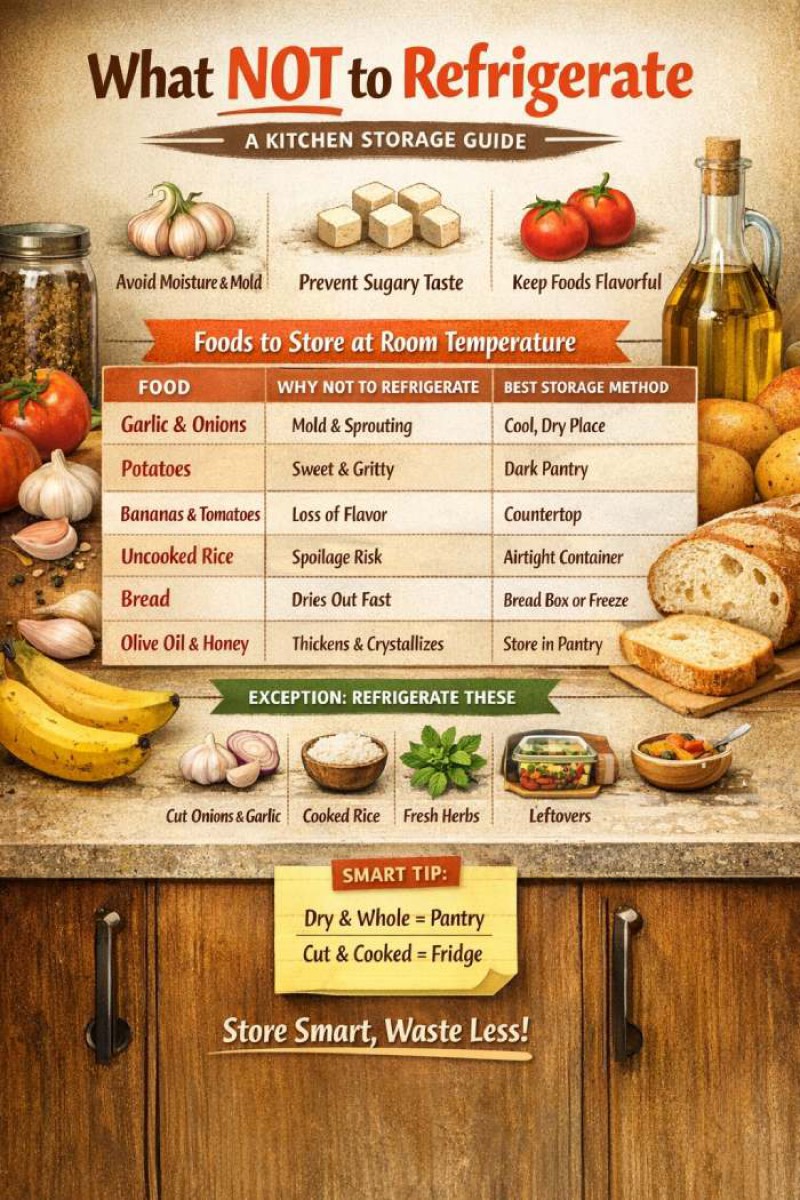
Pantry & Countertop Storage Table
| Food | Why NOT to Refrigerate | Best Storage Method |
|---|---|---|
| Garlic (whole bulbs) | Cold and moisture cause sprouting, rubbery texture, and mold | Cool, dry, ventilated area |
| Onions (whole) | Moist air leads to softness and mold; fridge odors spread | Dark, dry place with airflow |
| Potatoes | Cold converts starch to sugar, causing sweetness and browning | Cool pantry (not fridge) |
| Uncooked Rice | Moisture encourages spoilage and pests | Airtight container in pantry |
| Bananas | Cold stops ripening and blackens peel | Countertop |
| Tomatoes | Refrigeration ruins flavor and causes mealy texture | Room temperature |
| Bread | Fridge dries bread faster than air exposure | Counter (short term) or freezer |
| Olive Oil | Cold causes clouding and thickening | Dark cabinet, tightly sealed |
| Honey | Refrigeration causes crystallization | Pantry (shelf-stable indefinitely) |
| Coffee (beans or grounds) | Absorbs moisture and odors | Airtight container, room temp |
{rsform 189}
Common Exceptions (These SHOULD Be Refrigerated)
Not all forms of these foods behave the same way. Once cut, peeled, or cooked, refrigeration becomes important.
Refrigeration Exceptions Table
| Food | When Refrigeration IS Required |
|---|---|
| Garlic | Peeled or chopped |
| Onion | Cut or sliced |
| Rice | Cooked rice (use within 3–4 days) |
| Ginger | Peeled or cut ginger |
| Herbs | Most fresh herbs |
| Leftovers | All cooked foods |
Special Notes on Food Safety
-
Cooked rice must be refrigerated promptly to prevent bacterial growth.
-
Cut produce should always be stored in airtight containers.
-
Never refrigerate foods in open plastic bags—this traps moisture.
Simple Rule to Remember
Dry, whole, and oil-based foods belong in the pantry.
Cut, cooked, and leafy foods belong in the fridge.
Final Takeaway
Refrigeration is a powerful tool—but only when used correctly. Storing foods where they naturally last longest improves:
-
Flavor
-
Texture
-
Shelf life
-
Food safety
Using the right storage method also reduces food waste and saves money.
{rsform 189}