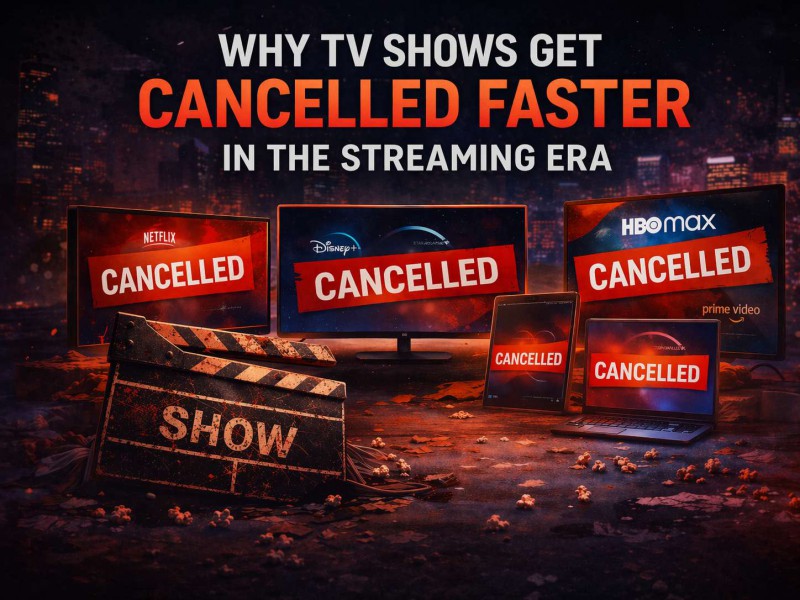
Why Tv Shows Get Canceled Faster In The Streaming Era
In today’s streaming-driven entertainment landscape, television shows are living shorter lives than ever before. Unlike traditional broadcast networks that nurtured series over multiple seasons to build syndication value, modern platforms prioritize immediate subscriber growth, retention metrics, and cost efficiency. With higher production budgets, data-driven decision-making, and intense content competition, even critically praised shows can be cut after just one or two seasons. The result is a television industry that moves faster, takes fewer long-term risks, and cancels underperforming series with unprecedented speed. You’re noticing a real industry shift. Many modern TV series now have 8–10 episodes per season, especially on streaming platforms. That’s very different from older network television, where 20–24 episodes per season was standard. Here’s why. 1️⃣ Streaming Model Changed the Economics Platforms like: Netflix Amazon Prime Video Apple TV+ operate on subscription retention, not weekly advertising. Instead of producing 22 episodes to fill a broadcast calendar (September–May), they produce: 8–10 tightly written episodes Higher production value Cinematic quality They’re optimizing for binge impact, not weekly ad slots. {rsform 189} 2️⃣ Budgets Are Much Higher Per Episode Modern prestige shows cost dramatically more per episode. For example: House of the Dragon reportedly costs ~$15–20M per episode The Mandalorian ~$15M per episode At those budgets, producing 22 episodes would be financially unsustainable. So instead: Fewer episodes Bigger scale Higher production value 3️⃣ Narrative Style Has Changed Older broadcast shows were structured around: “Monster of the week” Standalone episodes Episodic arcs Modern shows are built like: 8–10 hour movies Single-season narrative arcs Minimal filler Examples: Silo The Last of Us These are structured like limited series rather than traditional TV seasons. 4️⃣ Actor Contracts & Production Schedules Shorter seasons allow: Big-name actors to commit Higher flexibility in scheduling Reduced burnout More cinematic filming timelines It also reduces long-term financial risk if a show underperforms. 5️⃣ Network TV Still Does 18–22 Episodes Traditional broadcast networks still use longer seasons because they rely on ad revenue: Grey's Anatomy Law & Order: SVU These shows are built to fill weekly programming blocks. The Real Industry Shift We’ve moved from: Television as scheduled programming to Television as premium cinematic content Shorter seasons: Reduce filler Increase intensity Increase rewatch value Reduce financial exposure Why shows get canceled faster now Shows are getting canceled faster because the streaming-era economics are fundamentally different from broadcast television economics. The incentives changed. Here’s the structural breakdown. 1️⃣ Subscriber Acquisition > Longevity Platforms like: Netflix Disney+ HBO Max care most about: Did this show bring in new subscribers? Did it reduce churn? If a show does not significantly move subscriber numbers, it becomes expendable — even if the audience likes it. Broadcast TV needed steady weekly ratings. Streaming platforms need spikes. 2️⃣ Season 3 Becomes Expensive In streaming contracts, actor salaries often increase substantially after Season 2. Example pattern: Season 1: modest contracts Season 2: renegotiation Season 3: escalated salaries + backend deals At that point, the show is much more expensive. If it’s not a breakout hit like: Stranger Things The Last of Us it becomes a cost liability. So many shows die after Season 2. 3️⃣ No Syndication Incentive Anymore Old TV aimed for: 100 episodes → syndication → massive profit That’s why network shows ran 5+ seasons. Streaming doesn’t need syndication. It owns the content outright.There is no long-term rerun market incentive. So there’s less motivation to push to 80–100 episodes. 4️⃣ Algorithms Decide Quickly Streaming platforms analyze: Completion rate Drop-off episode Binge velocity Social engagement If viewers stop mid-season, the data flags it. Unlike Nielsen ratings (which were delayed and sampled), streaming platforms see behavior instantly. Underperformance is visible within weeks. 5️⃣ Content Saturation There are simply too many shows. In 2005: ~200 scripted series in the U.S. In 2022: Over 600 scripted series The competition is intense. If you’re not top-tier, you’re replaceable. 6️⃣ Short Attention Economy Modern viewing habits: Faster churn Less patience More options Studios no longer “grow” shows slowly the way they once did. Example: The Office had weak early ratings but was allowed to develop. Today, it likely would have been canceled after Season 1. 7️⃣ Debt & Profit Pressure Most streaming platforms are under: Heavy content debt Investor pressure Profitability mandates When Wall Street demands cost cutting, mid-tier shows get cut first. We’ve seen this especially after 2022 across multiple platforms. The Core Reality Streaming shows are evaluated on: Immediate ROI impact Not: Cultural longevity If it doesn’t move the business metric fast enough, it’s gone. {rsform 189}
Mapped Content Destinations
This creative references the existing image file. No duplicate image was created. Choose the article, offer, event, contest or creator profile you want the share to promote.
| Source | Mapped content | Category | Destination | Last synchronized | |
|---|---|---|---|---|---|
| ArticleBot #6016 |
Why Tv Shows Get Canceled Faster In The Streaming Era In today’s streaming-driven entertainment landscape, television shows are living shorter lives than ever before. Unlike traditional broadcast networks that nurtured series over mul |
Latest News | https://www.pampermenetwork.com/apps/contestmarket/article.php?id=6016 | 2026-08-20 03:10:10 |