
A productive summer and fall harvest can leave you with more fruits and vegetables than you can eat at once. Tomatoes, peppers, squash, apples, carrots, onions, potatoes, herbs, greens and other seasonal crops can often be kept for weeks or months when they are harvested at the right time and stored under the right conditions.
This article was optimized by the PublicistBot.
Want 10 articles per month promoting your business & making you money on autopilot? Activate the PublicistBot for $299.99/year. Add 720 short-form videos for $250 per month more.
Learn More About the Offer in This Article
Send your interest to the appropriate article or offer owner. PMN records the article that generated the enquiry, updates the funnel, logs the activity, sends notifications and adds the lead to PMN Messages.
The exact article is saved with the lead.
The featured offer or redemption link is preserved.
Owners receive messages and email notifications.
The applicant is connected to the campaign source.
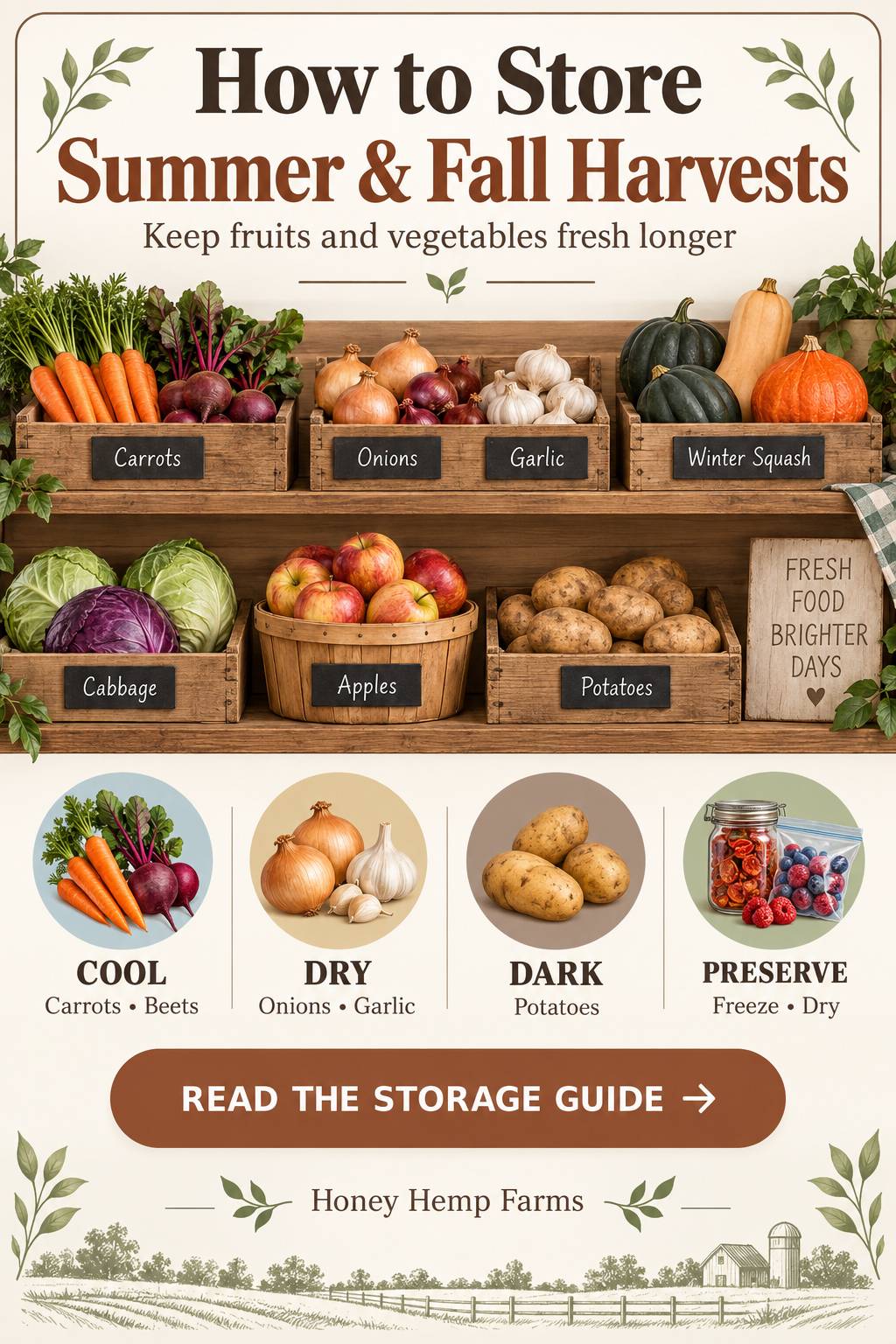
The key is matching each crop with the environment it prefers. Some fruits and vegetables need cold, humid storage. Others last longer in cool, dry conditions. Certain fruits should also be kept away from vegetables because they release ethylene gas, which speeds ripening and can shorten storage life.
For more farm and seasonal-living content, visit Honey Hemp Farms.
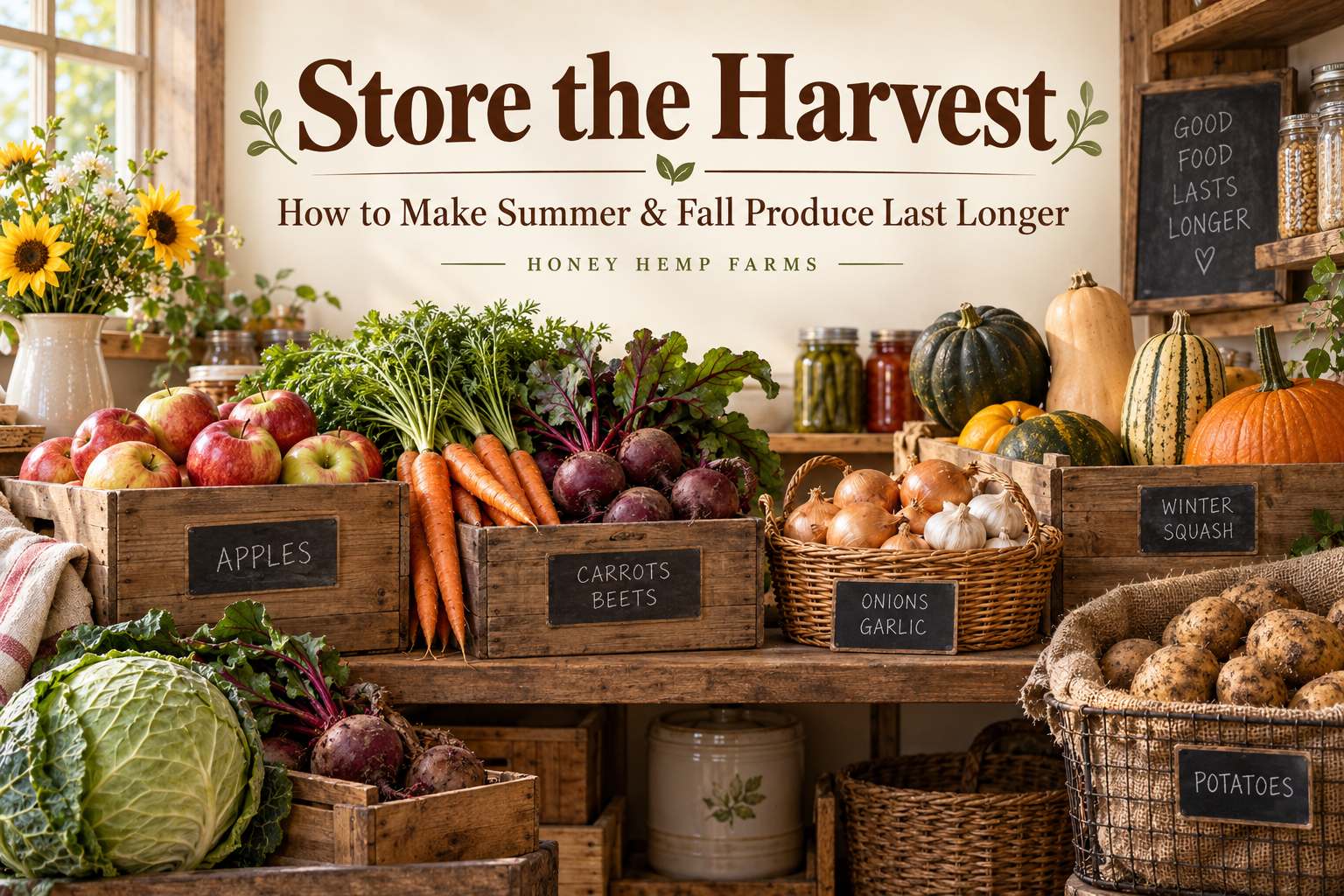
Start With the Best Produce
Long-term storage begins before anything goes into a refrigerator, pantry, cellar or freezer. Choose produce that is mature, firm and free from mold, bruises, deep cuts and insect damage.
- Use damaged produce first.
- Keep storage crops dry unless the crop specifically benefits from high humidity.
- Do not wash most long-term storage vegetables before putting them away.
- Brush off loose soil and wash produce when you are ready to use it.
- Inspect stored produce regularly and remove anything that begins to spoil.
Match the Crop to the Right Storage Environment
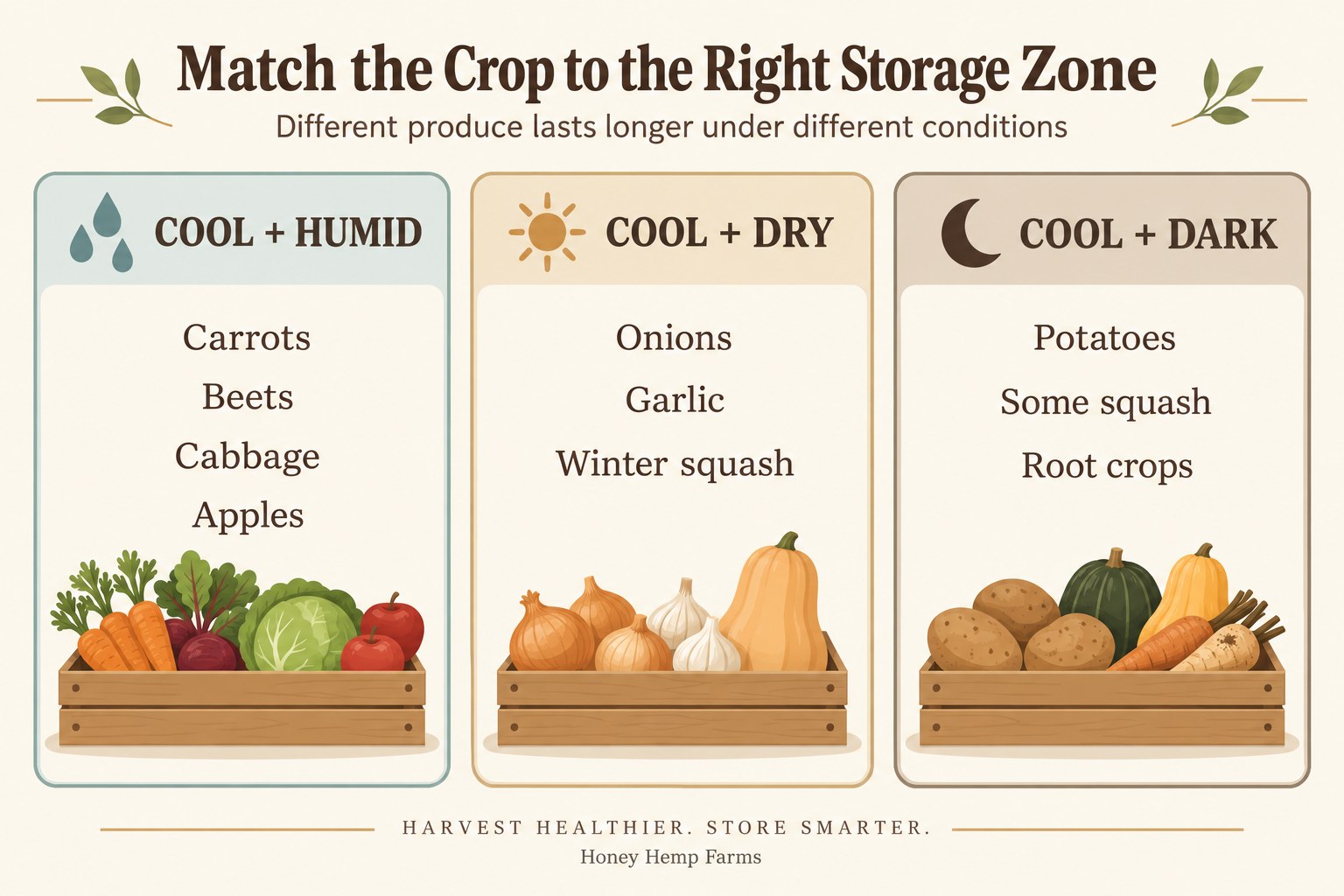
Most harvested produce falls into three broad storage categories.
| Storage Type | Best Conditions | Good For |
|---|---|---|
| Cool and humid | Cold temperature with relatively high humidity | Carrots, beets, cabbage, apples |
| Cool and dry | Cool temperature with airflow and lower humidity | Onions, garlic, many winter squash |
| Cool, dark and ventilated | Stable temperature, darkness and airflow | Potatoes and selected root crops |
Apples
Firm, mature apples can remain usable for weeks or months when they are kept cold and protected from bruising. Store them in ventilated containers and check them frequently. Remove any fruit that begins to soften or develop mold.
Apples release ethylene gas, so keep them away from vegetables that are sensitive to ethylene, including carrots, cabbage and leafy greens. Wrapping individual apples in paper can also help slow the spread of spoilage from one fruit to another.
Potatoes
Potatoes need darkness, cool temperatures and ventilation. After harvest, allow freshly dug potatoes to dry and cure in a dark, well-ventilated area before moving them into longer-term storage.
Paper sacks, burlap bags, baskets and ventilated boxes work well. Avoid sealed plastic bags. Keep potatoes away from direct light because light can cause greening.
Store potatoes separately from onions. Although the two are often kept together in kitchens, they can shorten each other's storage life.
Onions and Garlic
Onions and garlic store best after they are thoroughly cured. Allow the outer skins and necks to dry before placing them into a cool, dry area with good airflow.
Use mesh bags, baskets or slatted crates instead of airtight containers. Avoid deep piles that trap moisture. Whole garlic bulbs generally store better than separated cloves.
Carrots and Beets
Carrots and beets prefer cold, humid conditions. Remove leafy tops after harvest because the greens continue drawing moisture from the roots.
Store them in refrigerator produce drawers, perforated bags or containers filled with slightly damp sand. The goal is high humidity without standing water.
Cabbage
Firm cabbage heads can store surprisingly well. Harvest tightly formed heads, keep a few protective outer leaves in place and store the cabbage cold and humid.
Keep cabbage away from strong ethylene producers such as apples and pears whenever possible.
Winter Squash and Pumpkins
Winter squash is built for storage, but proper curing makes a major difference. Butternut, kabocha, many pumpkins and other storage varieties last longer when they are harvested mature, handled gently and cured before long-term storage.
- Leave the stem attached whenever possible.
- Keep squash dry and well ventilated.
- Store in a single layer when space allows.
- Check regularly for soft spots or mold.
- Use damaged squash first.
Sweet Potatoes
Sweet potatoes need different treatment from regular potatoes. They benefit from curing after harvest, which helps toughen the skin and improves storage quality.
After curing, keep them in a dry, dark location. Avoid very cold refrigerator temperatures because chilling can negatively affect texture and flavor.
Tomatoes
Handle tomatoes according to ripeness. Fully ripe tomatoes should be used relatively quickly, while mature green or partially ripe tomatoes harvested before frost can continue ripening indoors.
Place them in a single layer at room temperature and out of direct sunlight. Check them often and remove any fruit that begins to rot.
For more information please click here or select the claim offer button below.
Claim OfferNew Way To Market & Monetize Music
Whether it is music, events, articles or contests, PMN is the only creator marketplace dedicated to rewarding artists for building their fan network. See how we transform a simple MP3 file from static content into a dynamic shareable, trackable interactive video experience. Press play to sample the new way to enhance the content experience while simplifying the sales outreach, content discovery & monetization process. Ask how you can earn $1.00 from every fan that signs up FREE to support YOU.
For artists, managers, labels, producers and music marketers who want more from every release.
(30-second preview)
IMAGINE THIS POWERING YOUR NEXT RELEASE.
Peppers
Fresh peppers keep for a limited period in the refrigerator. Large harvests are better handled through freezing, drying, pickling or roasting and freezing.
Hot peppers are particularly well suited to drying, while sweet peppers freeze well for later use in cooked dishes.
Cucumbers and Summer Squash
Cucumbers, zucchini and other summer squash contain a lot of moisture and are not long-term storage crops. Refrigerate them and use them quickly.
When the harvest is larger than you can eat fresh, preserve cucumbers through pickling or fermentation. Freeze, dehydrate or cook and freeze summer squash.
Leafy Greens
Lettuce, kale, spinach, Swiss chard and similar greens lose moisture quickly. Keep them cold and slightly humid without allowing them to sit in water.
A slightly damp towel can help maintain moisture in the refrigerator. Hardy greens such as spinach and kale can also be blanched and frozen for longer storage.
Broccoli and Cauliflower
Broccoli and cauliflower prefer cold, humid storage but still have a relatively short fresh-storage life. Refrigerate them promptly after harvest.
For a large crop, blanching and freezing is one of the most practical ways to extend the harvest.
Fresh Herbs
Tender herbs such as parsley and cilantro can be refrigerated with their stems in a small amount of water. Rosemary, thyme, sage and other woody herbs can be refrigerated, dried or frozen.
Basil is sensitive to cold and is usually better kept at room temperature for short-term storage. For large herb harvests, drying or freezing is more practical than trying to keep everything fresh.
Pears, Grapes and Berries
Many pears are harvested while still firm and allowed to finish ripening after harvest. Keep firm pears cool and bring a few to room temperature as needed.
Grapes should be refrigerated promptly and kept dry until use. Berries are highly perishable and should also be chilled quickly. For long-term storage, freezing is one of the easiest options for berries and grapes.
Keep Ethylene-Producing Fruits Separate
Ethylene is a natural plant hormone released by certain fruits as they ripen. In storage, it can speed the aging of nearby produce.
| Produce That Produces More Ethylene | Produce That Can Be Sensitive to Ethylene |
|---|---|
| Apples | Broccoli |
| Pears | Cabbage |
| Tomatoes | Carrots |
| Peaches | Leafy greens |
| Plums | Cucumbers |
Preserve What Will Not Store Well
Not every crop needs to stay fresh. When the harvest is larger than you can reasonably store, preservation can extend it through winter and beyond.
Turn one article into an ongoing visibility engine.
PublicistBot can keep your business visible with monthly articles, search-friendly distribution, affiliate-aware sharing, and optional AI Marketer video content.
Learn How to Share This Article and Earn $1.00 per Free Enquiry
Ask PMN how referral-aware article sharing works, how eligible free enquiries are attributed, and how Social Rewards are tracked in your account.
The exact article is saved with the lead.
The featured offer or redemption link is preserved.
Owners receive messages and email notifications.
The applicant is connected to the campaign source.
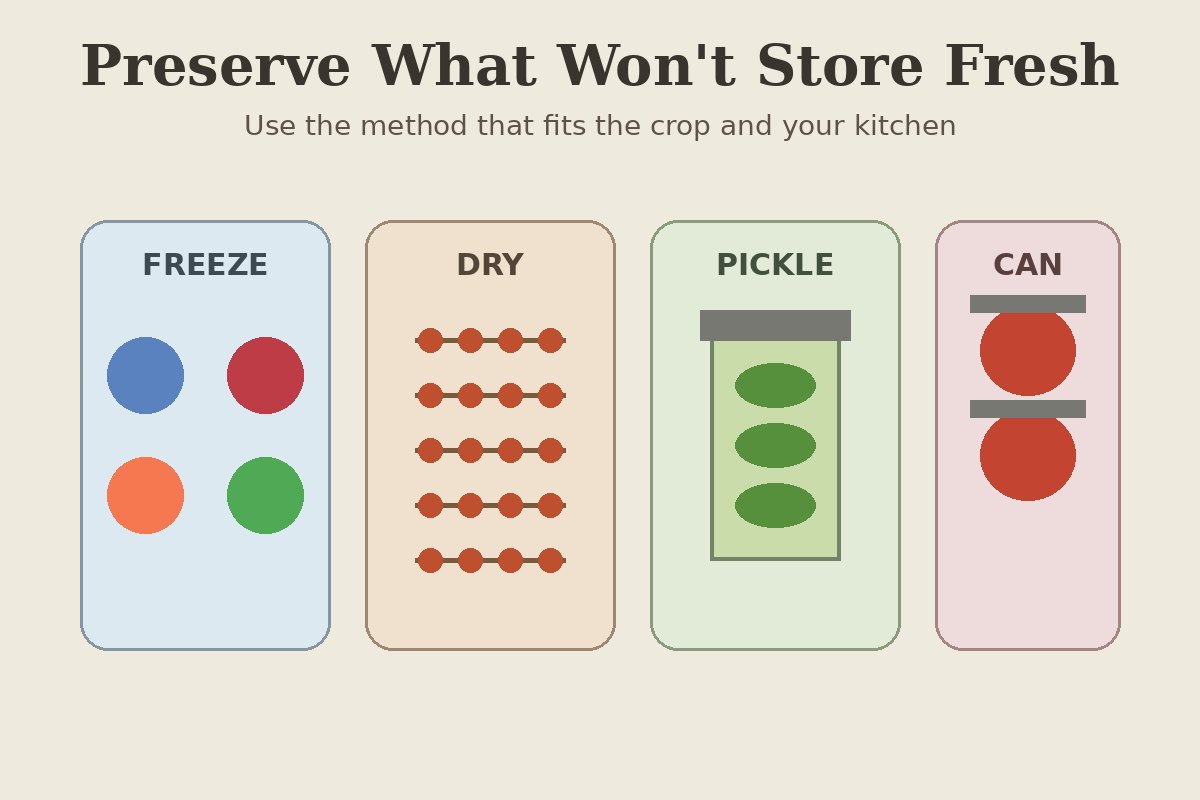
Freezing
Freezing works well for berries, peppers, green beans, corn, broccoli, cauliflower, spinach, kale, herbs and prepared tomato sauces. Many vegetables should be blanched before freezing to help preserve quality.
Drying
Drying is especially useful for herbs, hot peppers, apples, pears, tomatoes, onions and garlic. Properly dried food takes up little space and can store for long periods.
Pickling and Fermenting
Cucumbers, beets, peppers, onions, carrots, cabbage and green beans can all be preserved through pickling or fermentation.
Canning
Home canning can preserve a large harvest for extended periods, but safe processing matters. High-acid and properly acidified foods may be suitable for boiling-water canning, while low-acid vegetables require pressure canning using tested recipes and correct processing times.
Do not improvise canning procedures. Use tested recipes from recognized food-safety authorities.
A Simple Harvest Storage Plan
Divide the harvest into four groups so the most perishable food gets used first.
- Eat first: ripe tomatoes, berries, cucumbers, leafy greens, summer squash and anything bruised or damaged.
- Refrigerate: carrots, beets, cabbage, broccoli, cauliflower, grapes, celery and other cold-loving crops.
- Store for winter: potatoes, onions, garlic, apples, winter squash and suitable pumpkins.
- Preserve: excess tomatoes, peppers, beans, corn, berries, herbs and anything unlikely to stay fresh long enough.
Make the Harvest Last Into Winter
A successful summer and fall harvest does not have to disappear when the growing season ends. The biggest difference comes from matching each fruit or vegetable with the storage environment it naturally prefers.
Keep root vegetables cold and humid. Keep onions and garlic dry and ventilated. Protect potatoes from light. Cure squash and storage crops properly. Separate ethylene-producing fruits from sensitive vegetables. Freeze, dry, pickle or can anything that will not remain fresh long enough.
Done well, harvesting becomes only the first stage of the process. Proper storage turns a few productive weeks in the garden into food that can continue supplying the kitchen throughout fall, winter and sometimes well into the following spring.
Want more optimized articles like this?
PMN can create and promote up to 120 PublicistBot articles per year for $299.99/year, with an optional AI Marketer video add-on that adds up to 720 videos for $250 per month more.
Learn How to Earn $90.00 When a User Activates PublicistBot AI Agents
Ask PMN about the PublicistBot referral process, eligibility, attribution, commission tracking and the steps required for a qualifying activation.
The exact article is saved with the lead.
The featured offer or redemption link is preserved.
Owners receive messages and email notifications.
The applicant is connected to the campaign source.
For more information please click here or select the claim offer button below.
Claim Offer

