
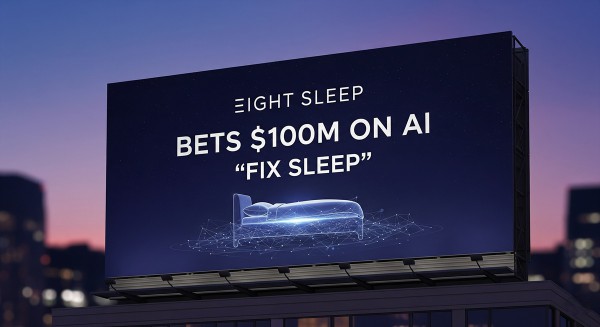
Sleep is no longer just rest — it’s becoming a health frontier, and Eight Sleep is leading the charge. The sleep-optimization tech company just raised $100 million in Series D funding to expand its offerings, pursue medical-grade certifications, and deepen international growth.
This article was optimized by the PublicistBot.
Want 10 articles per month promoting your business & making you money on autopilot? Activate the PublicistBot for $299.99/year. Add 720 short-form videos for $250 per month more.
Learn More About the Offer in This Article
Send your interest to the appropriate article or offer owner. PMN records the article that generated the enquiry, updates the funnel, logs the activity, sends notifications and adds the lead to PMN Messages.
The exact article is saved with the lead.
The featured offer or redemption link is preserved.
Owners receive messages and email notifications.
The applicant is connected to the campaign source.
Founded by Matteo Franceschetti, Eight Sleep has long promoted the concept of “sleep fitness.” Its flagship Pod mattress cover adjusts temperature and tracks sleep biometrics. But the company’s latest move signals a much bigger ambition: turning sleep into a proactive health platform.
The AI Push: Meet the “Sleep Agent”
Eight Sleep is introducing Sleep Agent, an AI-powered “digital twin” of each user.
-
It runs simulations to predict and optimize nightly rest.
-
It leverages 1 billion+ hours of biometric data already collected by the company.
-
It aims to spot risks early — from sleep apnea to menopause-related sleep disruption.
The company is also developing Longevity Twins, virtual health simulations that use personal sleep data to forecast long-term health outcomes.
Medical Ambitions
Franceschetti told CNBC the company will seek FDA medical device classification for conditions such as sleep apnea and menopause-related insomnia. If approved, Eight Sleep’s products could one day qualify for insurance reimbursement — a crucial step toward mainstream adoption, given the $3,000+ price tag on its current hero product.
Beyond Tech Bros: Going Global
Once seen as a tool for Silicon Valley elites, Eight Sleep is now:
-
Expanding its marketing to everyday users.
-
Opening retail stores to reach a wider audience.
-
Preparing for expansion into Asia, with China as a major growth target.
Since its founding, the company has logged $500M+ in sales — proof that sleep optimization is moving from niche luxury to a broader wellness movement.
The Big Picture
Eight Sleep is positioning itself as the “operating system for sleep and longevity.” The combination of AI, medical validation, and mainstream distribution could help redefine how we approach rest as both a performance booster and a preventative health tool.
But questions remain:
-
Will consumers pay four figures for better sleep?
-
Can Eight Sleep secure FDA clearance and insurance coverage fast enough?
-
Will competitors in the growing sleep tech + health AI sector outpace them?
Eight Sleep just added a $100M Series D to turn your bed into a health platform. Beyond its Pod smart cover, the company is rolling out Sleep Agent (AI “digital twins” that predict and optimize your rest) and plans to pursue FDA pathways for sleep apnea and menopause features, open retail stores, and expand further into Asia. Below is the market context, how this stacks up against competitors, why it matters for health and culture, and where the risks (and upside) lie. The Wall Street Journal
1) Market Context: Sleep Tech Is Moving From Gadget to Care
Size & Growth (2025–2030)
-
Sleep tech devices market: Analysts project strong growth through 2030 as connected mattresses, smart rings, and wearables mature and shift from “wellness” to reimbursable care. (Representative industry reports show double-digit CAGRs and rising adoption.) CDC
-
Macro need: ~1 in 3 U.S. adults don’t get enough sleep; the economic hit runs into the hundreds of billions in lost productivity annually. LinkedIn Business Insider
Why investors care
-
If sleep tech crosses into medical-grade use (e.g., apnea screening, menopausal symptom support), it taps payer budgets and employer health programs—not just consumer wallets. Regulatory clearances in adjacent devices show the path is real but rigorous. PMCXtalks
2) Competitive Landscape: Who’s Building the “OS for Sleep”?
| Company | Core Form Factor | What It Measures/Does | Business Model | Notables |
|---|---|---|---|---|
| Eight Sleep (Pod) | Smart mattress cover + base | Bed temp (55–110°F), sleep stages, HR, RR; AI auto-adjustment | Hardware purchase (multi-thousand $) | Pursuing FDA pathways; launching Sleep Agent digital twins; retail expansion. Eight Sleep |
| Oura | Smart ring | Sleep stages, HRV, temp trends | Ring + membership | Popular with longevity crowd; subscription content & insights. |
| WHOOP | Band (no screen) | Recovery, strain, sleep | Subscription-first | Performance/athlete positioning; sleep coaching. |
| Apple Watch | Smartwatch | Sleep stages, vitals; broad app ecosystem | Device + optional services | Deep platform integration; continued upgrades to sleep analytics. Apple |
| Fitbit (Google) | Trackers & watches | Sleep stages + Sleep Score | Device + optional Premium | Established sleep-scoring model; enterprise ties. Google |
Takeaway: Eight Sleep differentiates not as a wearable, but as an environmental controller (temperature, elevation, ambient sound) aiming to become the bedroom’s control plane—a different wedge than ring/band ecosystems. Eight Sleep
3) Why Consumers Are Moving Toward Health & Longevity Tech
-
Mainstream adoption of sleep tracking (Apple, Fitbit) normalized continuous biometrics; rings and bands made it comfortable; beds make it frictionless (no charging, no wearing). Apple
-
Employers and insurers increasingly fund sleep programs due to clear links with productivity and cardiometabolic risk. The economic case (hundreds of billions lost) keeps expanding incentives. Business Insider
4) What Eight Sleep Is Actually Launching
-
Sleep Agent: AI “digital twin” to simulate scenarios nightly and optimize temperature/elevation proactively.
-
Clinical push: Pursuing FDA classification for features related to sleep apnea and menopause—a step toward reimbursement.
-
Distribution: Retail stores and Asia expansion; aiming beyond early adopters. The Wall Street Journal
5) Human & Cultural Impact: Sleep as the “Third Pillar of Health”
Sleep joins diet and exercise as a foundational pillar because it:
-
Regulates metabolism, immune function, and cognition
-
Drives workplace performance and safety
-
Amplifies or blunts the benefits of diet/exercise—poor sleep undermines both. (Public-health framing and corporate wellness programs increasingly reflect this.) LinkedIn Business Insider
PMN INTERACTIVE CREATIVEMusic Monetization ExperienceATTENTION FANS, CREATORS & DIGITAL MARKETERSMake Money Building Your Fan Network
Share music, videos, articles, events and contests. Build your network, grow your audience and earn rewards when people connect through you. PMN turns ordinary content into shareable, interactive and trackable experiences designed to help you reach more people and monetize your network. Earn $1.00 for every fan who signs up FREE to support you.
For artists, creators, fans and everyday social media users.
AURORA REACTORREADY · PRESS PLAY
FEATURED TRACK(30-second preview)
30-SECOND PREVIEW COMPLETEIMAGINE THIS POWERING YOUR NEXT RELEASE.
Like what you have seen & heard?Request a video player or widget like this.(Free with the PublicistBot)Tell a friend and earn $1.00 for each free fan registrationOver 500 Million Impressions Generated for performers, creators, models, athletes and brands using music powered by PMN approved artistsONE MUSIC FILE → AN INTERACTIVE MUSIC MARKETING & MONETIZATION SYSTEM Finally, a creator monetization & music distribution system that rewards artists for building their fan network.
6) Skeptic Corner: Is $3,000+ Realistic for the Mass Market?
-
Price reality: The Pod system lists from roughly $3,000 (up to ~$5k+ depending on configuration). That’s premium—closer to Peloton-era pricing than a wearable. The Wall Street Journal
-
Adoption path:
-
Phase 1: Affluent early adopters and athletes prove value.
-
Phase 2: Lower-cost SKUs, financing, and insurance coverage (post-FDA) expand access.
-
Phase 3: Employer subsidies and retail presence further mainstream the category.
-
-
Benchmarks: WHOOP and Oura won with subscriptions and smaller upfront costs; Eight Sleep must show hard outcomes (apnea metrics, menopausal symptom relief) to unlock payer channels and justify price.
7) Risks & Realities
Privacy & Data Governance
-
Beds + continuous biometrics = sensitive data. Eight Sleep says data are encrypted, not sold, with anonymization and short on-device retention; critics have previously flagged policy language and the need for strict governance. Expect GDPR/CCPA scrutiny, consent management, and third-party audits. Eight Sleep
Regulation
-
To make medical claims (e.g., apnea), companies typically need FDA clearance with clinical endpoints (e.g., polysomnography comparisons). Some sleep devices have cleared these bars; many “wellness” products have not. Eight Sleep is pursuing this path. U.S. Food and Drug Administratio
Competition
-
Platform gravity (Apple/Google) and strong ring/band ecosystems press on customer LTV. Eight Sleep’s edge is environmental control + passive sensing, but it must maintain lead in comfort, reliability, and outcomes. AppleGoogle Help
8) Future Outlook: From Sleep Gadget to Longevity Stack?
Could Eight Sleep become a longevity company?
Yes—if AI agents tie nightly optimization to multi-year risk reduction (weight, blood pressure, glycemic control, menopausal symptom burden) and the firm validates this with clinical evidence and payer-accepted endpoints. That would shift it from “sleep comfort” to preventive care. The Wall Street Journal
Will beds become the next health operating system?
Plausible. The bed is the most consistent sensor mount in daily life. If it integrates with labs, Rx therapy, CBT-I programs, and employer benefits—without wearables—the bedroom hub could orchestrate much of cardiometabolic prevention and women’s health support. Eight Sleep
Turn one article into an ongoing visibility engine.
PublicistBot can keep your business visible with monthly articles, search-friendly distribution, affiliate-aware sharing, and optional AI Marketer video content.
Learn How to Share This Article and Earn $1.00 per Free Enquiry
Ask PMN how referral-aware article sharing works, how eligible free enquiries are attributed, and how Social Rewards are tracked in your account.
The exact article is saved with the lead.
The featured offer or redemption link is preserved.
Owners receive messages and email notifications.
The applicant is connected to the campaign source.
9) What Success Looks Like (and How to Get There)
Five milestones to watch
-
FDA wins (apnea/menopause features) with peer-reviewed evidence. U.S. Food and Drug Administration
-
Payer/Employer pilots showing reduced claims or improved productivity. Business Insider
-
Retail conversion beyond tech early adopters (attach rates, returns). The Wall Street Journal
-
Privacy transparency (external audits, SOC2/ISO attestations, granular data controls). Eight Sleep
-
Interoperability with EHRs, menopause care platforms, and apnea care pathways.
Practical playbook for operators
-
Measure what matters: clinically relevant outcomes (AHI reductions, hot-flash frequency, daytime sleepiness scales), not just vanity metrics. U.S. Food and Drug Administration
-
Design for adoption: no-wear frictionless sensing, battery-free for the user, and “set-and-forget” AI routines. Eight Sleep
-
Price creatively: tiered SKUs, financing, HSA/FSA eligibility, and employer bundles. The Wall Street Journal
-
Govern data like PHI: explicit consents, minimization, revocation flows, regular privacy reports. Eight Sleep
Sleep is no longer passive. Companies like Eight Sleep want it to be measured, optimized, and prescribed. With $100M in fresh capital and a billion hours of sleep data, the company is betting that the future of healthcare might just begin in bed.
End Notes (Sources)
-
WSJ coverage of Eight Sleep’s $100M raise, pricing, retail plans, and FDA ambitions. The Wall Street Journal
-
CDC: 1 in 3 adults don’t get enough sleep. LinkedIn
-
RAND: Economic cost of insufficient sleep (U.S.). Business Insider
-
Apple Watch sleep stages—official technical overview. Apple
-
Fitbit Sleep Stages & Sleep Score (Google support; consumer guide). Google HelpWIRED
-
Oura pricing & membership (official).
-
WHOOP membership model (official).
-
Eight Sleep product capabilities (temperature range, claims) and privacy statements. Eight Sleep
-
FDA guidance & clearances relevant to sleep apnea and home testing. U.S. Food and Drug Administration
Want more optimized articles like this?
PMN can create and promote up to 120 PublicistBot articles per year for $299.99/year, with an optional AI Marketer video add-on that adds up to 720 videos for $250 per month more.
Learn How to Earn $90.00 When a User Activates PublicistBot AI Agents
Ask PMN about the PublicistBot referral process, eligibility, attribution, commission tracking and the steps required for a qualifying activation.
The exact article is saved with the lead.
The featured offer or redemption link is preserved.
Owners receive messages and email notifications.
The applicant is connected to the campaign source.