
Lake Ontario is full of fish, but if you walk along a random stretch of shoreline, it can feel like there is nothing there.
This article was optimized by the PublicistBot.
Want 10 articles per month promoting your business & making you money on autopilot? Activate the PublicistBot for $299.99/year. Add 720 short-form videos for $250 per month more.
Learn More About the Offer in This Article
Send your interest to the appropriate article or offer owner. PMN records the article that generated the enquiry, updates the funnel, logs the activity, sends notifications and adds the lead to PMN Messages.
The exact article is saved with the lead.
The featured offer or redemption link is preserved.
Owners receive messages and email notifications.
The applicant is connected to the campaign source.
That does not mean the lake is empty. It usually means the fish are holding in the places that give them what they need: cooler water, food, structure, current, shelter, or access to tributaries. Shoreline fishing on Lake Ontario is less about picking any open spot and more about finding the right type of shoreline.
The good news is that there are still plenty of productive places to fish from shore, especially around river mouths, piers, harbours, marinas, rocky points, wetlands, and restored waterfront habitats.
Why There Are Not Always Lots of Fish Right Along the Shore
1. Lake Ontario is deep, and many fish move with temperature
Lake Ontario is a large, deep lake. Fish do not stay in one place all year. They move based on temperature, oxygen, food, and spawning patterns.
In warm weather, many trout and salmon move deeper or farther offshore because they prefer cooler water. In spring and fall, they are more likely to move closer to shore or into tributaries.
Destination Ontario notes that trout around Toronto are most active in cooler water, with productive periods in spring, fall, and other cold-weather months. It also notes that many major Lake Ontario river mouths are open to trout fishing year-round, but anglers should check the specific zone rules.
2. Fish follow food, not sidewalks
Fish do not spread evenly along the shoreline. They follow baitfish, insects, crayfish, gobies, plankton, and other food.
That is why some shoreline areas look dead, while a nearby river mouth, harbour wall, weed bed, or rocky point may hold fish.
Good shoreline fishing areas usually have at least one of these:
- Current
- Rocks
- Weeds
- Drop-offs
- Shade
- Baitfish
- River inflow
- Marina structure
- Wetland habitat
- Piers or breakwalls
3. Much of the shoreline has been changed
Urban shorelines are often hardened with concrete, seawalls, marinas, roads, and development. That can reduce natural fish habitat.
Fish prefer structure and habitat. Natural shoreline areas with wetlands, rocks, plants, sheltered bays, and current usually attract more fish than flat concrete walls with no cover.
That is why restored areas, marshes, river mouths, and parks often produce better fishing than random open waterfront.
4. Clear water can make fish more cautious
Invasive mussels have made many parts of the Great Lakes clearer by filtering plankton from the water. Clearer water can make fish more cautious near shore because they are more exposed to predators, shadows, people, and boat traffic.
So even when fish are present, they may feed during lower-light periods such as:
- Early morning
- Evening
- Cloudy days
- After rain
- During seasonal migrations
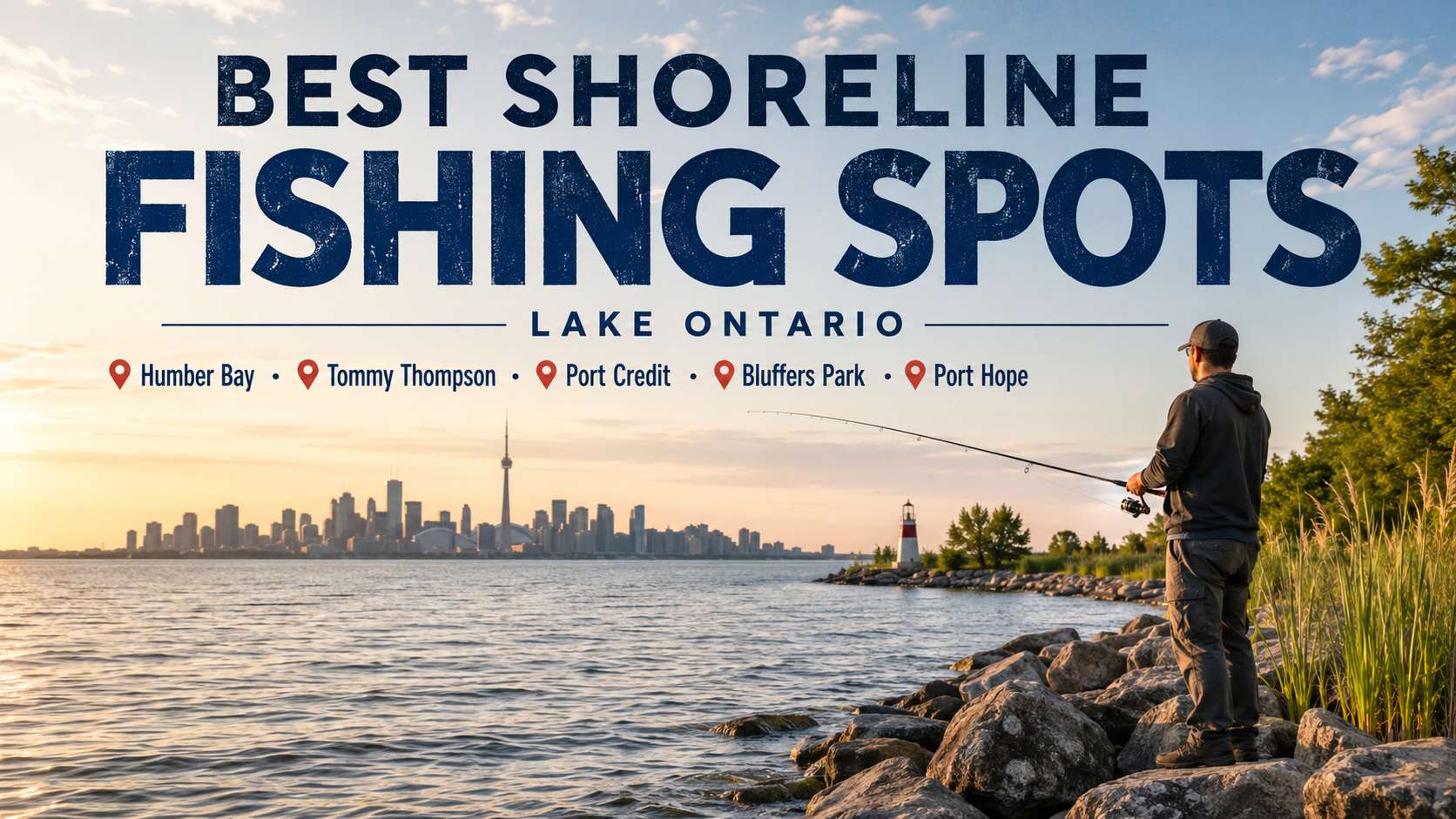
Best Shoreline Locations to Fish on Lake Ontario
Here are some of the better types of places and specific shoreline locations to consider.
Quick Location Table
| Location | Best For | Why It Works |
|---|---|---|
| Humber River Mouth / Humber Bay | Salmon, trout, bass, pike, panfish, carp | River mouth, current, resident and migratory fish |
| Humber Bay Park West | Mixed species | Near Mimico Creek and Humber River influence |
| Toronto Islands | Bass, pike, panfish, carp | Sheltered water, weeds, structure |
| Tommy Thompson Park | Bass, pike, carp, panfish | Restored habitat, rocky shoreline, protected water |
| Ashbridges Bay | Pike, bass, panfish, carp | Harbour structure, bay habitat |
| Bluffers Park | Bass, panfish, carp, trout/salmon at times | Deeper nearby water and shoreline access |
| Port Credit / Credit River Mouth | Salmon and trout | Major migratory river mouth |
| Port Dalhousie / St. Catharines | Salmon, trout, bass, walleye, panfish | Piers, marina, Lake Ontario access |
| Ganaraska River / Port Hope | Salmon and trout | Major salmon and trout run |
| Kingston Waterfront / Bay of Quinte Area | Bass, pike, walleye, perch | Eastern Lake Ontario structure and warmer bays |
1. Humber River Mouth and Humber Bay
This is one of the best urban shore fishing areas in Toronto.
The mouth of the Humber River, around Humber Bay Park East and the pedestrian bridge, is listed by Destination Ontario as one of Toronto’s most productive urban salmon and trout fishing spots, especially during the fall run. The same source also lists species such as chinook salmon, coho salmon, rainbow trout, brown trout, northern pike, bass, perch, panfish, bullhead, and carp.
Why it is good
- Major river mouth
- Seasonal salmon and trout movement
- Good access
- Mix of resident and migratory fish
- Nearby parkland and shoreline structure
Best times
- Spring for trout
- Late summer and fall for salmon
- Early morning or evening for bass, pike, and carp
2. Humber Bay Park West
Humber Bay Park West is another strong shoreline option. Destination Ontario notes that the nutrient-rich inflow of Mimico Creek, combined with the park’s location near the mouth of the Humber River, attracts both migratory and resident fish year-round.
Why it is good
- Big waterfront park
- River and creek influence
- Shoreline walking access
- Mixed fish species
- Good city skyline views
Good targets
- Salmon
- Trout
- Pike
- Bass
- Perch
- Carp
- Panfish
3. Toronto Islands
The Toronto Islands are one of the better shoreline fishing areas because the water is more sheltered and has more structure than much of the open lakefront.
The City of Toronto lists the Toronto Islands among its official “Where to Fish” locations.
Why it is good
- Sheltered channels
- Weeds and structure
- Shoreline variety
- Good for casual anglers
- Less exposed than open lakefront
Good targets
- Largemouth bass
- Northern pike
- Carp
- Perch
- Panfish
4. Tommy Thompson Park
Tommy Thompson Park is another strong Toronto shoreline location because it has a mix of rocky shoreline, protected water, habitat restoration, and access to deeper water nearby.
The City of Toronto lists Tommy Thompson Park as one of its public fishing locations.
Why it is good
- Rocky structure
- Protected bays
- Restored natural habitat
- Good walking access
- Less “flat concrete” shoreline
Good targets
- Bass
- Pike
- Carp
- Panfish
- Migratory fish at certain times
5. Ashbridges Bay Park
Ashbridges Bay is a popular shoreline fishing location because bays and harbour-style areas often hold warmer water, weeds, baitfish, and structure.
For more information please click here or select the claim offer button below.
Claim OfferMake Money Building Your Fan Network
Share music, videos, articles, events and contests. Build your network, grow your audience and earn rewards when people connect through you. PMN turns ordinary content into shareable, interactive and trackable experiences designed to help you reach more people and monetize your network. Earn $1.00 for every fan who signs up FREE to support you.
For artists, creators, fans and everyday social media users.
(30-second preview)
IMAGINE THIS POWERING YOUR NEXT RELEASE.
The City of Toronto includes Ashbridges Bay Park on its list of places to fish.
Why it is good
- Bay habitat
- Harbour structure
- Accessible shoreline
- Good for warm-water species
Good targets
- Pike
- Bass
- Carp
- Perch
- Panfish
6. Bluffers Park
Bluffers Park in Scarborough is another public shoreline location listed by the City of Toronto.
It can be a better option than featureless shoreline because it has park access, harbour structure, and deeper Lake Ontario water nearby.
Why it is good
- Shore access
- Harbour and marina structure
- Nearby deeper water
- Scenic location
Good targets
- Bass
- Carp
- Panfish
- Pike
- Trout or salmon during certain seasonal windows
7. Rouge River Marsh
Rouge River Marsh is one of the more diverse fishing areas in Toronto’s east end, but access is important to confirm before going.
Destination Ontario describes Rouge River Marsh as one of the most diverse fishing spots in the GTA, with both resident fish and migratory species travelling up from Lake Ontario. It also notes that Rouge Beach and the marsh are temporarily closed because of construction, with access expected to resume in 2027.
Why it is good
- River mouth habitat
- Marsh habitat
- Resident and migratory fish
- Natural shoreline environment
Check before going
Because access conditions can change, confirm whether the area is open before planning a trip.
8. Port Credit / Credit River Mouth
Port Credit is one of the best-known shoreline fishing areas west of Toronto.
Destination Ontario describes the lower Credit River in Mississauga as especially productive for migratory salmon and trout, and notes that the Credit River is known for more than 45 fish species.
Why it is good
- Major tributary
- Salmon and trout runs
- Harbour access
- Walkable waterfront area
- Strong seasonal movement
Best times
- Spring for trout
- Late summer and fall for salmon
- Cooler mornings and evenings
9. Port Dalhousie and St. Catharines Shoreline
On the Niagara side of Lake Ontario, Port Dalhousie and Port Weller are well-known access points.
FishingBooker’s St. Catharines guide notes that Port Dalhousie allows anglers to fish Lake Ontario from the pier, marina, boat, or kayak, and also lists 12 Mile Creek, Four Mile Creek, and the Niagara River as important fishing options in the area.
Why it is good
- Pier access
- Marina structure
- Lake Ontario access
- Nearby tributaries
- Seasonal trout and salmon movement
Good targets
- Trout
- Salmon
- Bass
- Walleye
- Panfish
10. Ganaraska River / Port Hope
For salmon and trout, Port Hope is one of the classic Lake Ontario shoreline and tributary areas.
Destination Ontario notes that the Ganaraska River flows into Lake Ontario at Port Hope and is home to one of Southern Ontario’s most extensive salmon runs, along with excellent trout fishing.
Why it is good
- Major salmon run
- Strong trout opportunities
- Shore-accessible areas
- Famous migratory fish destination
Best times
- Fall for salmon
- Spring and fall for trout
Turn one article into an ongoing visibility engine.
PublicistBot can keep your business visible with monthly articles, search-friendly distribution, affiliate-aware sharing, and optional AI Marketer video content.
Learn How to Share This Article and Earn $1.00 per Free Enquiry
Ask PMN how referral-aware article sharing works, how eligible free enquiries are attributed, and how Social Rewards are tracked in your account.
The exact article is saved with the lead.
The featured offer or redemption link is preserved.
Owners receive messages and email notifications.
The applicant is connected to the campaign source.
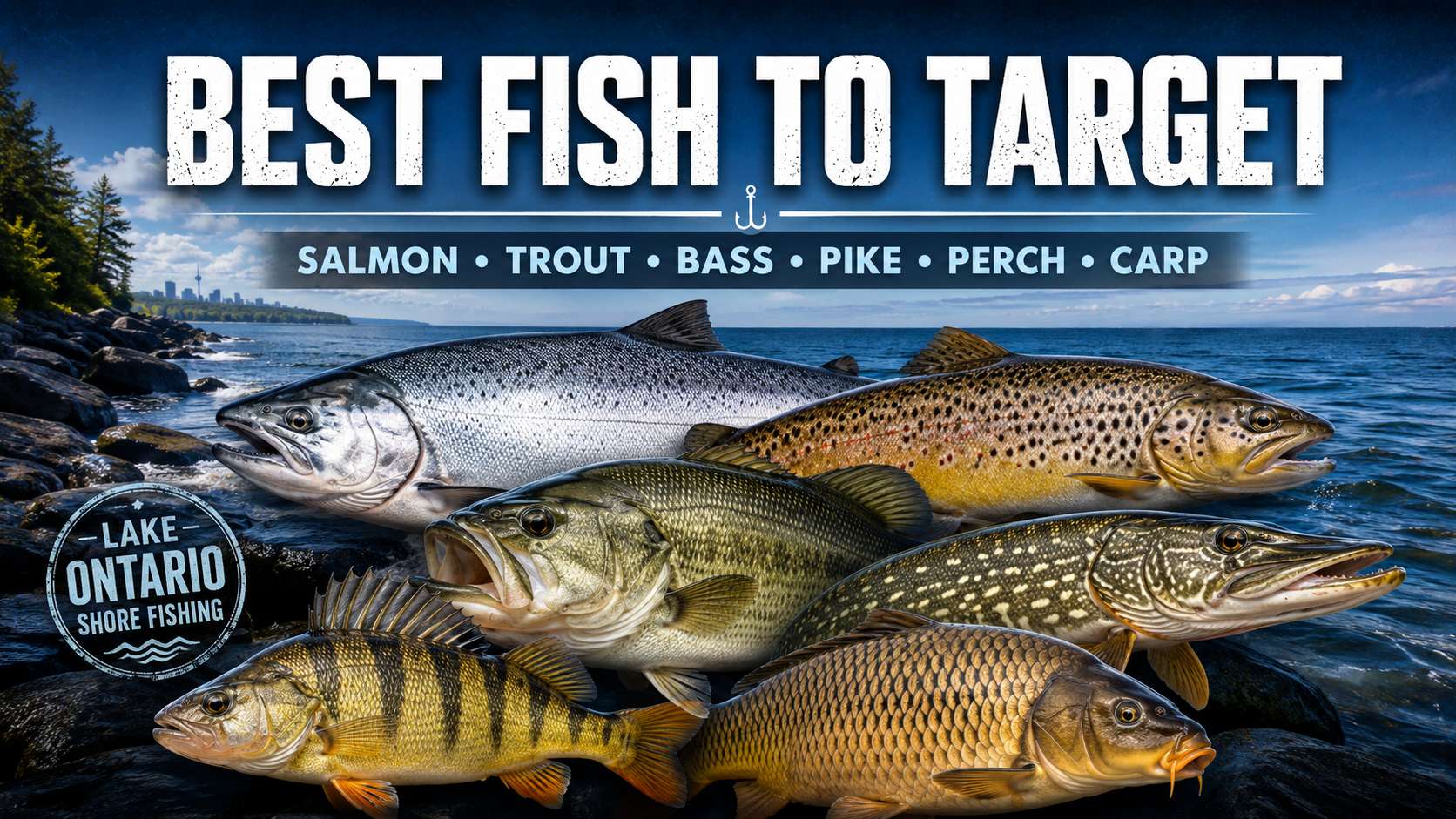
What to Fish For From Shore
| Species | Best Shoreline Areas | Best Timing |
| Salmon | River mouths, piers, tributary mouths | Late August through fall |
| Rainbow trout / steelhead | Tributary mouths and lower river sections | Spring and fall |
| Brown trout | River mouths, harbours, cold-water areas | Spring, fall, cool weather |
| Bass | Rocks, weeds, bays, harbours | Late June through fall |
| Pike | Weedy bays, marinas, sheltered water | Spring and fall, also early/late day |
| Carp | Warm bays, harbours, river mouths | Spring through fall |
| Perch and panfish | Piers, marinas, sheltered bays | Spring through fall |
| Walleye | Eastern Lake Ontario, Bay of Quinte, low light | Spring, fall, evening |
Best Conditions for Shoreline Fishing
If you are walking the shoreline and not seeing fish, try changing the conditions rather than giving up.
Better fishing windows usually include:
- Early morning
Fish are often closer to shore before the sun gets high. - Evening
Low light makes fish more comfortable feeding near shore. - After rain
Rain can increase tributary flow and trigger trout or salmon movement. - Cloudy days
Fish may stay shallower longer when the light is reduced. - Wind blowing into shore
Wind can push baitfish and food toward the shoreline. - Seasonal runs
Salmon and trout move near shore and into rivers at specific times.
Safety, Rules, and Eating Fish
Before fishing, check the current Ontario rules for the exact waterbody and zone. Lake Ontario is part of Fisheries Management Zone 20, which includes Lake Ontario, Hamilton Harbour, the Niagara River downstream of the falls, and related waters. Ontario’s Zone 20 regulations list species seasons and limits, including open seasons for Pacific salmon and rainbow trout, plus limits for pike, walleye, yellow perch, and other species.
The City of Toronto also reminds anglers to follow posted signs because they indicate where fishing is and is not allowed.
Before eating fish, check Ontario’s Guide to Eating Ontario Fish, which provides advice by fish species, size, and location. The guide gives different advice for the general population and sensitive populations, including children and people who are pregnant or may become pregnant.
Summary
There are fish along the Lake Ontario shoreline, but they are not evenly spread out. The best shore fishing usually happens where the shoreline has something fish need: current, food, rocks, weeds, shade, piers, harbours, marinas, wetlands, or tributary access.
Instead of fishing a random open stretch of waterfront, focus on high-percentage areas like Humber River Mouth, Humber Bay Park, Toronto Islands, Tommy Thompson Park, Ashbridges Bay, Bluffers Park, Port Credit, Port Dalhousie, and the Ganaraska River at Port Hope.
Lake Ontario rewards anglers who think like fish: find the food, find the structure, watch the season, and fish the low-light windows.
Want more optimized articles like this?
PMN can create and promote up to 120 PublicistBot articles per year for $299.99/year, with an optional AI Marketer video add-on that adds up to 720 videos for $250 per month more.
Learn How to Earn $90.00 When a User Activates PublicistBot AI Agents
Ask PMN about the PublicistBot referral process, eligibility, attribution, commission tracking and the steps required for a qualifying activation.
The exact article is saved with the lead.
The featured offer or redemption link is preserved.
Owners receive messages and email notifications.
The applicant is connected to the campaign source.
For more information please click here or select the claim offer button below.
Claim Offer