
A Twisted Beginning: The Origins of Pretzels
The pretzel’s history stretches back over 1,400 years and is as full of twists and turns as the snack itself. While the exact origin is debated, most food historians agree that pretzels likely emerged in medieval Europe, with strong ties to Christian monasteries.
This article was optimized by the PublicistBot.
Want 10 articles per month promoting your business & making you money on autopilot? Activate the PublicistBot for $299.99/year. Add 720 short-form videos for $250 per month more.
Learn More About the Offer in This Article
Send your interest to the appropriate article or offer owner. PMN records the article that generated the enquiry, updates the funnel, logs the activity, sends notifications and adds the lead to PMN Messages.
The exact article is saved with the lead.
The featured offer or redemption link is preserved.
Owners receive messages and email notifications.
The applicant is connected to the campaign source.
One popular story places the pretzel’s invention in 7th-century Italy, where monks baked strips of dough, twisted them into a shape resembling arms crossed in prayer, and called them pretiola (Latin for “little rewards”). These baked treats were given to children who learned their prayers.
Another theory credits German bakers in the early Middle Ages, who perfected the recipe and introduced the crispy, salted version we know today. Pretzels eventually became a symbol of good luck, prosperity, and spiritual fulfillment, appearing in everything from wedding ceremonies to religious fasting meals during Lent.
By the 17th century, pretzels were a beloved snack across Europe. German immigrants carried the tradition to Pennsylvania in the 1700s, where the pretzel became deeply rooted in American food culture — especially in Pennsylvania Dutch communities.
Sponsored by:
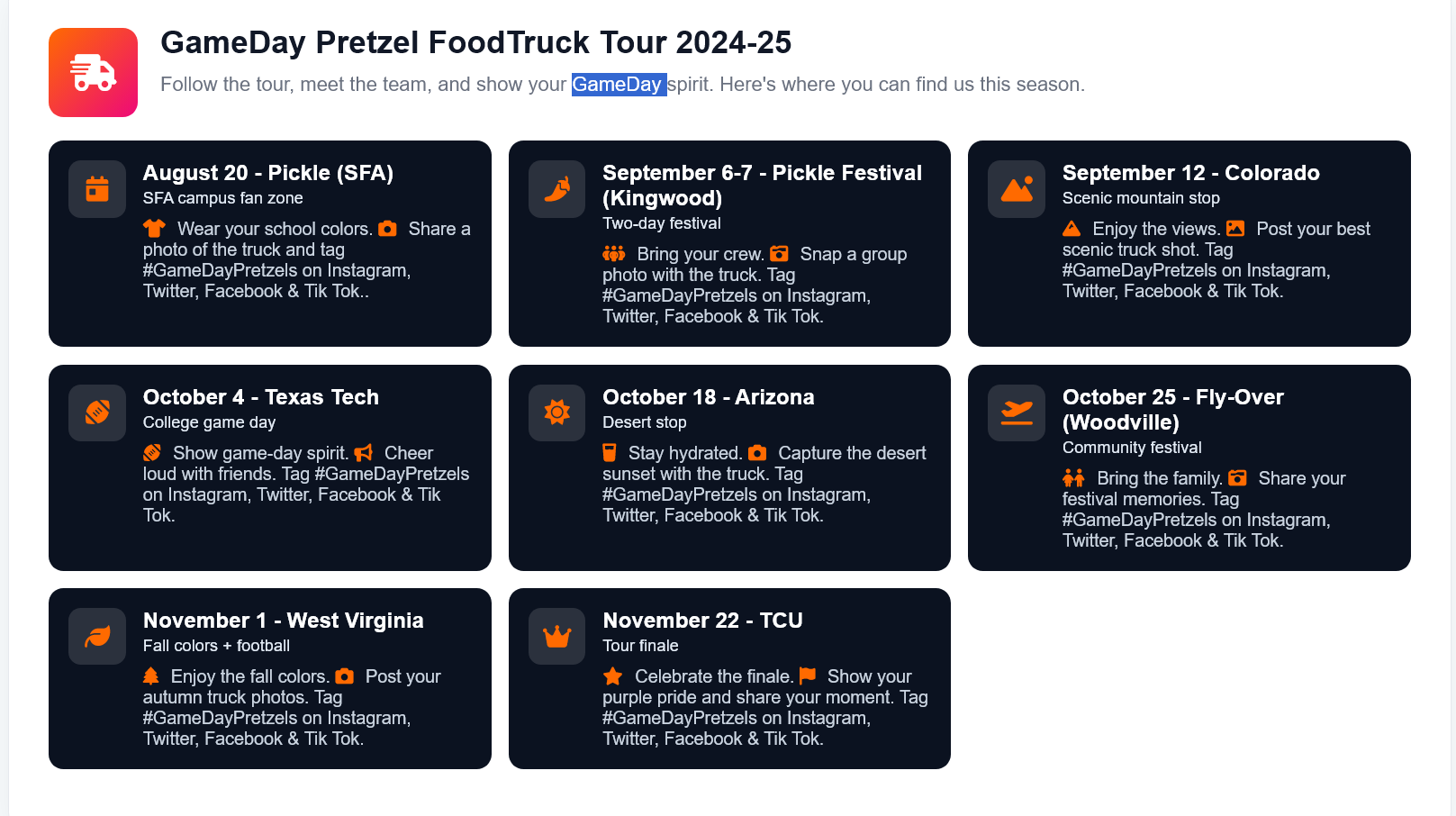
Types of Pretzels
Today, pretzels have evolved into a wide variety of shapes, flavors, and textures. Broadly, they can be divided into soft and hard categories, each with numerous variations.
1. Soft Pretzels
Soft pretzels are the oldest and most traditional form — chewy, warm, and often eaten fresh.
-
Traditional Bavarian Pretzels (Brezn) – Thick and chewy, usually topped with coarse salt, served in beer gardens.
-
Philadelphia Soft Pretzels – Slightly thinner, with a chewy crust; often sold in knots or sticks, popular with mustard dipping.
-
Stuffed Soft Pretzels – Filled with cheese, meats, or chocolate for a modern twist.
-
Sweet Glazed Pretzels – Topped with cinnamon sugar, chocolate drizzle, or icing.
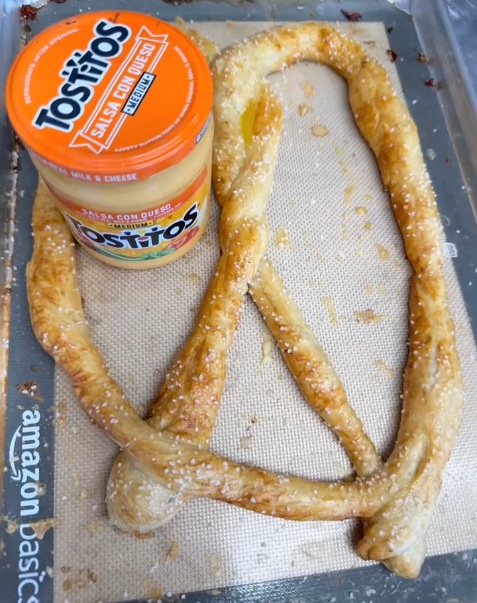
Sample Delicious Pretzels by GameDay Pretzels
Craving a winning snack? Treat yourself to the unbeatable taste of GameDay Pretzels — fresh, flavorful, and made to satisfy every bite. Order now and taste the victory!
2. Hard Pretzels
Hard pretzels emerged in the 19th century when bakers in Pennsylvania extended the baking time to create a snack with a longer shelf life.
-
Pretzel Rods – Long, crunchy sticks, great for dipping in mustard, cheese, or chocolate.
-
Pretzel Nuggets – Bite-sized pieces, sometimes filled with peanut butter or cheese.
-
Mini Twists – Small versions of the classic knot, often served as a party snack.
-
Flavored Hard Pretzels – Coated with spices, honey mustard, ranch, or jalapeño seasoning.
3. Specialty Pretzels
In recent decades, bakers and snack companies have experimented widely.
-
Pretzel Buns – Used for sandwiches or burgers, with a chewy crust and soft interior.
-
Chocolate-Covered Pretzels – A sweet-and-salty favorite, often topped with sprinkles or crushed nuts.
-
Pretzel Crisps – Flat, thin versions perfect for dipping.
-
Gluten-Free Pretzels – Made with alternative flours for those with dietary restrictions.
Cultural Significance
Pretzels are more than just a snack — they are cultural icons. In Germany, pretzels are part of traditional breakfasts and Oktoberfest celebrations. In America, National Pretzel Day is celebrated on April 26, honoring the snack’s enduring popularity.
The History and Varieties of Pretzels: From Monastery Ovens to Modern Snack Aisles
A Twist in History
The pretzel’s story begins over 1,400 years ago, with origins rooted in European monastic tradition. The earliest recorded appearance is believed to be in 7th-century Italy or southern France, where monks baked strips of dough, twisted them into a shape resembling crossed arms in prayer, and baked them as a reward for children who learned their prayers. They called these treats pretiola (“little rewards”).
By the Middle Ages, pretzels spread across Germany, Austria, and Switzerland, becoming a symbol of prosperity, good luck, and religious devotion. In some regions, pretzels were even worn as necklaces by children at Easter for blessings.
Make Money Building Your Fan Network
Share music, videos, articles, events and contests. Build your network, grow your audience and earn rewards when people connect through you. PMN turns ordinary content into shareable, interactive and trackable experiences designed to help you reach more people and monetize your network. Earn $1.00 for every fan who signs up FREE to support you.
For artists, creators, fans and everyday social media users.
(30-second preview)
IMAGINE THIS POWERING YOUR NEXT RELEASE.
German immigrants later brought pretzels to North America in the 1700s, settling in Pennsylvania — still home to America’s pretzel capital today.
Types of Pretzels
Pretzels now come in countless forms, ranging from the classic soft, warm bakery pretzel to bite-sized snacks for the modern pantry. Here are some of the most popular varieties:
| Type | Description | Typical Origin | Texture |
|---|---|---|---|
| Soft Pretzel | Freshly baked, often served warm with salt, mustard, or cheese dips. | Germany / Pennsylvania Dutch | Chewy |
| Hard Pretzel | Baked until crunchy for a longer shelf life; available in twists or sticks. | USA (Pennsylvania) | Crisp |
| Pretzel Rods | Long, thick hard pretzels — great for dipping in chocolate or peanut butter. | USA | Crunchy |
| Pretzel Bites | Small pieces of soft pretzel, often served with dips. | Modern snack innovation | Soft/Chewy |
| Brezel | German-style soft pretzel, larger and more rustic, often with coarse salt. | Bavaria | Chewy/Crusty |
| Pretzel Rolls | Pretzel dough shaped into sandwich rolls or buns. | Germany / USA | Soft outside, fluffy inside |
| Chocolate-Covered Pretzels | Sweet-and-salty treat with hard pretzels coated in chocolate. | USA | Crunchy/Sweet |
| Stuffed Pretzels | Soft pretzels filled with cheese, meat, or sweet fillings. | USA | Chewy |
| Gluten-Free Pretzels | Made with rice flour or other alternatives. | Global modern market | Varies |
Turn one article into an ongoing visibility engine.
PublicistBot can keep your business visible with monthly articles, search-friendly distribution, affiliate-aware sharing, and optional AI Marketer video content.
Learn How to Share This Article and Earn $1.00 per Free Enquiry
Ask PMN how referral-aware article sharing works, how eligible free enquiries are attributed, and how Social Rewards are tracked in your account.
The exact article is saved with the lead.
The featured offer or redemption link is preserved.
Owners receive messages and email notifications.
The applicant is connected to the campaign source.
Symbolism and Fun Facts
-
In Catholic tradition, the three holes in a pretzel represent the Holy Trinity.
-
Pretzels were once used in weddings in Switzerland to symbolize marriage bonds.
-
The largest pretzel ever baked weighed 842 pounds and was made in El Salvador in 2015.
From Ancient Ovens to Modern Cravings
Whether dipped in mustard at a ball game, paired with a pint in a Bavarian beer hall, or enjoyed straight from a bag on the go, pretzels remain one of the world’s most enduring snacks.
From humble monastery kitchens to baseball stadiums and artisan bakeries, they have traveled centuries and continents, reinventing themselves along the way. Their centuries-old symbolism of good fortune and sharing still lives on — even if today, the only blessing we’re seeking might be an extra cup of cheese dip. And with styles ranging from giant, chewy Bavarian twists to crunchy, seasoned minis, there’s a pretzel for every taste and every moment.
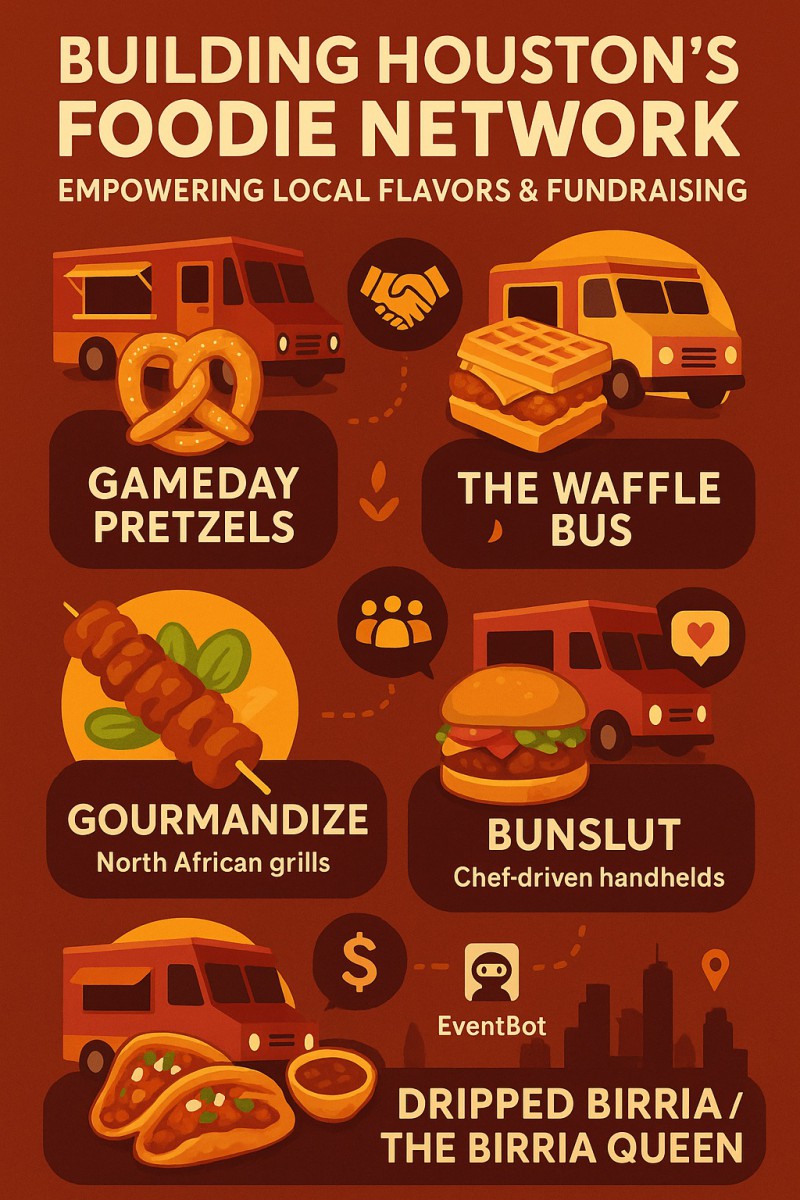
Get Your Food Brand Featured on the PMN Foodie Network
Are you a food brand looking to boost your visibility?
Join the Pamper Me Network’s Foodie Network and put your business in front of food lovers everywhere.
Check out our latest review of Houston’s hottest food trucks — and imagine your brand getting the same spotlight.
Want more optimized articles like this?
PMN can create and promote up to 120 PublicistBot articles per year for $299.99/year, with an optional AI Marketer video add-on that adds up to 720 videos for $250 per month more.
Learn How to Earn $90.00 When a User Activates PublicistBot AI Agents
Ask PMN about the PublicistBot referral process, eligibility, attribution, commission tracking and the steps required for a qualifying activation.
The exact article is saved with the lead.
The featured offer or redemption link is preserved.
Owners receive messages and email notifications.
The applicant is connected to the campaign source.